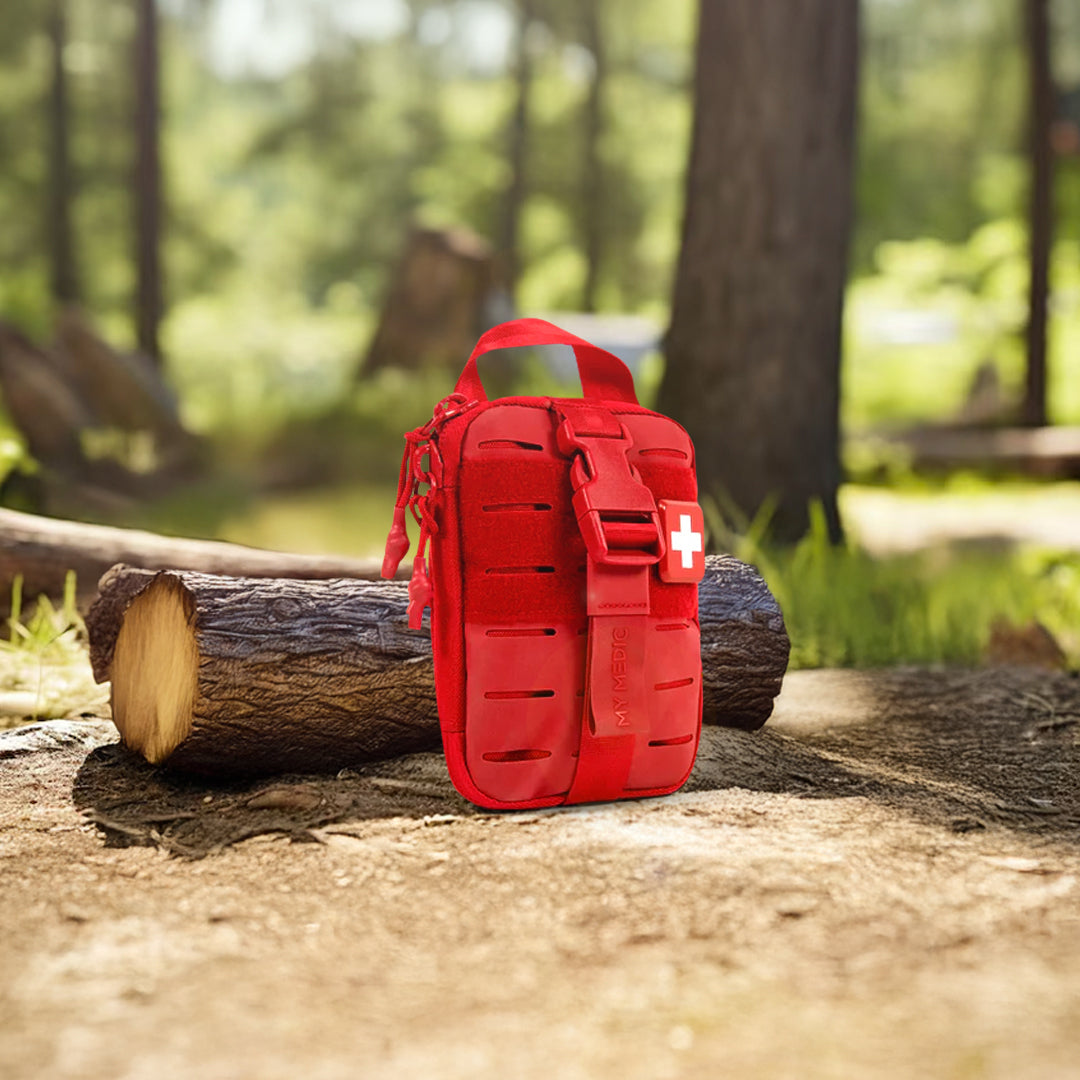
A pet emergency kit needs seven things: food and water in sealed containers, a backup collar with ID plus a leash or carrier, a pet first aid kit, an extra supply of any medication, sanitation supplies, copies of vet records with a photo of you together, and one comfort item. Store three to seven days as a working minimum, two weeks if you follow the CDC checklist, and build a light evacuation version alongside the one you keep at home.
Most pet owners think they have this covered because there is a bag of kibble in the pantry and a leash by the door. Then the evacuation order comes at 2am, the kibble is a 30-pound bag you cannot carry with a cat crate in the other hand, and the vet records are in an email account on a phone at 4 percent. The gap is never love. It is packing.
A pet emergency kit is not a smaller version of your own. A dog emergency kit has to solve containment, sanitation, and identification for an animal that cannot follow instructions under stress, and a cat kit solves those three differently. This covers what goes in each, how much food and water to store, and the planning that decides whether the kit ever gets used.
What Is the Best Pet Emergency Kit for a Dog?
The best pet emergency kit for a dog is one that covers food, water, containment, medical, sanitation, and identification in a single grab-and-go bag, sized to your dog and stored where you can reach it in the dark. Ours is The Safe Pet Kit at $129.99 to $139.99, built in a dog edition and a cat edition rather than one generic animal kit.
The dog edition carries sealed emergency food and water rations, a leash and waste bags, a pet first aid kit, a fireproof document pouch for vet records, and a rope toy. Treat the included rations as the short-term layer: they are sealed for storage rather than portioned to a fixed number of days, so how long they last depends on the size of the animal eating them.
What to check on any kit before you trust it, ours included. How many days of food does it actually hold, in calories rather than "days"? Is there a waterproof or fireproof place for documents, or are you expected to improvise? Does it include a backup collar and tag, not just a leash? For a large dog, do the included rations mean anything at all, or are they sized for a terrier? A 90-pound shepherd eats three times what a beagle does, and no off-the-shelf kit fixes that. Add your own food and water to reach three to seven days at minimum, or the two weeks the CDC pet checklist calls for.
What Should Be in an Emergency Kit for Pets?
Ready.gov recommends building two kits, a larger one for sheltering in place and a lightweight version for evacuation, and reviewing them regularly so the food and medicine stay fresh. That two-kit split is the single most useful idea in pet preparedness, because the bag that works at home is too heavy at the curb.
-
Food and water. Food in an airtight, waterproof container, plus water and a non-spill bowl. Three to seven days is the working minimum; the CDC pet checklist asks for a two-week supply of both, per animal. If you feed wet food, a manual can opener belongs in the kit, and pop-top cans are easier.
-
Medication. An extra supply of anything your pet takes daily, in a waterproof container. The CDC checklist puts this at two weeks of medication and a month of flea, tick, and heartworm preventative, which matches the two-week food target rather than undercutting it.
-
Containment and control. A carrier or crate for each pet, a backup collar with an ID tag, and a spare leash. A harness is worth adding for a dog that panics and backs out of a collar.
-
Medical. A pet first aid kit, and a short conversation with your vet about what your specific animal needs added to it.
-
Sanitation. Litter and a litter box or pan for cats, waste bags for dogs, paper towels, and trash bags. Sanitation is the item people skip and then regret inside 24 hours in a hotel room.
-
Identification and paperwork. Copies of registration and vaccination records in a waterproof container and saved electronically, plus a current photo of you together with your pet. The photo is not sentimental. It is how you prove ownership at a shelter.
-
Comfort. A familiar toy, treats, or bedding. Stress is a health issue for animals in unfamiliar places, and a toy that smells like home does real work.
How Do I Prepare My Pet for an Emergency?
Gear is the easy half. The plan is the half that fails.
-
Get the microchip registered, and current. A microchip is only as good as the phone number attached to it. Log into the registry, confirm the number is the one in your pocket today, and add an out-of-area emergency contact, which Ready.gov specifically recommends because local lines and local friends may be in the same disaster you are.
-
Find the pet-friendly places before you need them. Many public shelters and hotels do not take animals. Identify boarding kennels, vet clinics, and pet-friendly hotels outside your immediate area now, while you can browse calmly, and write the addresses in the kit.
-
Set up a buddy system. Agree with a neighbor that whoever is home evacuates both households' animals. Trade keys and crate locations. Then do the same for them.
-
Train the carrier. A cat that has only ever seen the carrier on the way to the vet will not cooperate at 2am. Leave it out, open, with a blanket in it, for a week. This is the cheapest preparedness work you will ever do.
-
Rehearse once. Walk the plan: who grabs which animal, which door, where the leash is, who has the kit. Once is enough to find the flaw.
If you are building a household supply from scratch rather than adding to one, our 12-month preparedness buying order shows where pet supplies fit against water, food, and power.
Dog Kit vs Cat Kit: What Actually Changes
The core is the same. Four things change.
-
Sanitation. A dog needs waste bags. A cat needs a foldable litter box, a scoop, and litter crystals that pack small, which is what the cat edition of our kit carries instead of the leash-and-bags set.
-
Containment. Dogs travel on a leash and harness. Cats travel in a carrier, one per cat, because two stressed cats in one box is an injury.
-
Comfort item. Dogs settle with something to chew, cats with something to bat at. Sounds trivial until you are three days into a stranger's spare room.
-
Water discipline. Cats undershoot water intake when stressed and dehydrate quietly. If your cat eats wet food normally, keep wet food in the kit rather than switching to dry in the middle of a crisis.
The Mistakes That Leave Pets Behind
-
The microchip registered to a phone number from two carriers ago. The most common single failure, and the cheapest to fix tonight.
-
No proof of ownership. Without records or a photo together, reclaiming an animal from a shelter gets slow at exactly the wrong time.
-
One carrier for two cats. Buy the second carrier.
-
Medication only in the current bottle. If the bottle is in the bathroom and you leave through the kitchen, the medication does not exist.
-
A kit built for a puppy and a dog that is now 80 pounds. Rations, harness, and carrier all need to match the animal you have now.
-
Wet food and no manual can opener. A can you cannot open is not food.
Where Should You Store a Pet Emergency Kit?
Next to your own go bag, beside the door you would actually leave through, at a height you can grab one-handed while holding a leash or a carrier. Keep a duplicate light kit in the vehicle if you live somewhere with wildfire or flood evacuation orders, since the fastest evacuations start when you are not home. A kit in a basement cabinet behind seasonal storage is a kit you will leave behind.
If local officials tell you to evacuate, your pets go with you. Animals left behind get lost or hurt, and going back for them later is the scenario every one of these lists exists to prevent.
The people who get this right are not the ones with the most gear. They are the ones whose animals are already accounted for in the plan, before anything goes wrong.
Start with The Safe Pet Kit in the dog or cat edition, and pair it with a household kit like The Safe House 72-hour family kit so the whole household is covered from one closet. The full range is in Survival Kits.
FAQ
What is the best pet emergency kit for a dog?
The best dog emergency kit covers food and water for three to seven days, a backup collar with ID, a leash and harness, a pet first aid kit, medication, waste bags, and vet records in a waterproof pouch, all in one bag you can carry with a free hand. Our Safe Pet Kit, dog edition, runs $129.99 to $139.99 and includes sealed food and water rations, first aid, a fireproof document pouch, and a comfort toy. Three to seven days is the working minimum, and the CDC pet checklist asks for two weeks, so a large dog needs food added on top of any off-the-shelf kit.
What should be in an emergency kit for pets?
Food and water for three to seven days in sealed containers, bowls, an extra supply of any daily medication, a pet first aid kit, a carrier or crate for each animal, a backup collar with ID tag and a spare leash, sanitation supplies including litter and a pan for cats, copies of vaccination and registration records in a waterproof container, a photo of you together with your pet, and a familiar toy or bedding. Ready.gov recommends keeping two versions: a larger shelter-in-place kit and a light evacuation kit.
How do I prepare my pet for an emergency?
Start with identification: confirm the microchip registry has your current phone number and an out-of-area emergency contact, and keep a collar and tag on the animal. Then find pet-friendly hotels, kennels, and clinics outside your area before you need them, set up a buddy system with a neighbor who can evacuate your animals if you are not home, train your cat or dog to accept the carrier calmly, and store the kit beside your own go bag. Walk through the plan once so you find the gap while it is cheap.
How much food and water does a pet emergency kit need?
Plan three to seven days as the working minimum and two weeks if you follow the CDC pet checklist, which asks for a two-week supply of food and water for each animal. Size it to your animal rather than to a label. Keep food in an airtight, waterproof container, include a non-spill bowl, and store water alongside it. Ask your vet what your specific pet needs daily, since intake varies widely by size, age, and condition. Rotate food and water roughly every six months so nothing in the kit is past date when you reach for it.
Should I take my pet if I evacuate?
Yes. If officials tell you to evacuate, take your pets. Animals left behind can be lost or injured, and return access is often restricted for days. Because many public shelters and hotels do not accept animals, identify pet-friendly options in advance and keep those addresses and phone numbers inside the kit.