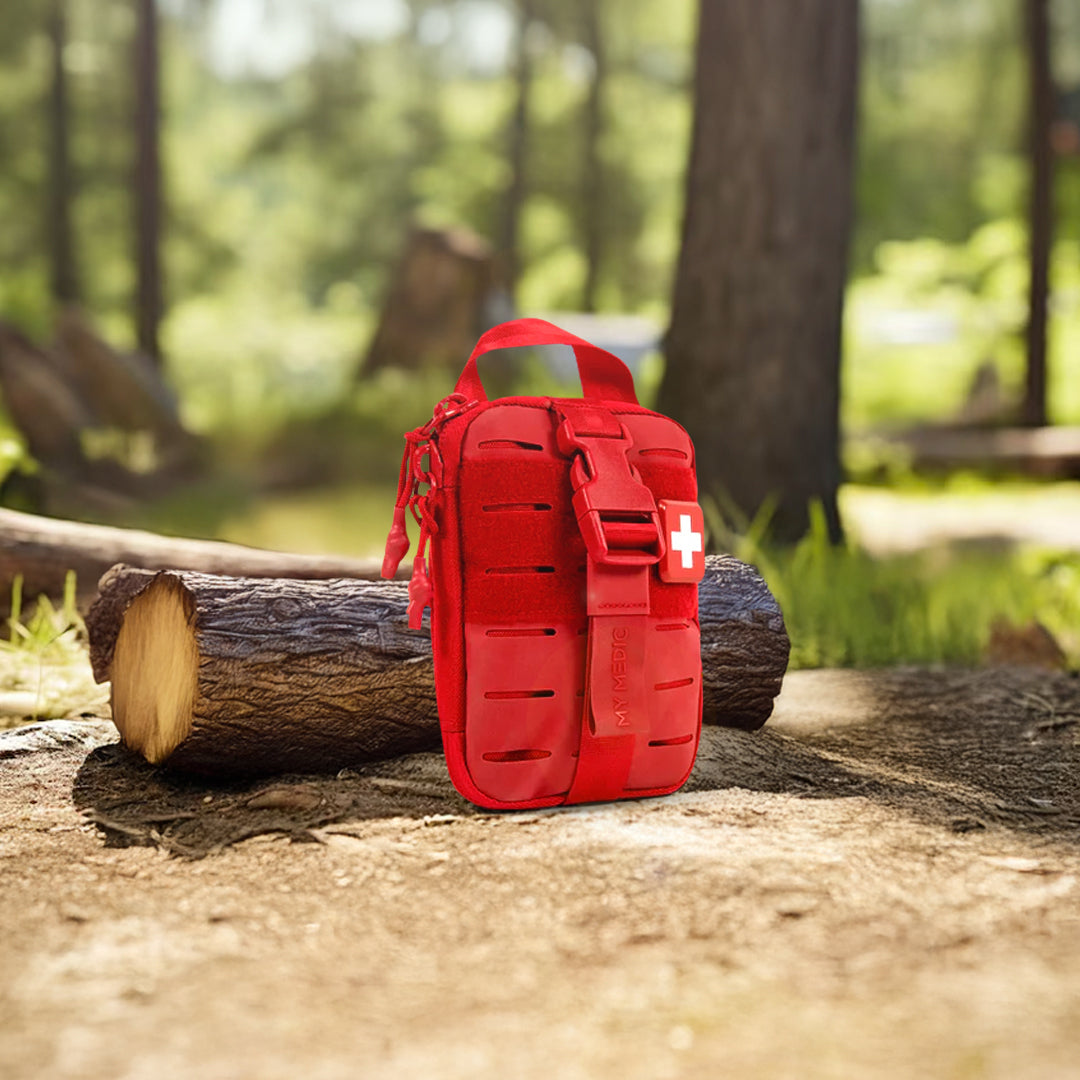
A hurricane kit needs water, food, light, power, first aid, communication, sanitation, documents, and evacuation gear, packed by category and ready before a storm is named. Store one gallon of water per person per day, with a minimum of three days and ideally seven to fourteen, because hurricanes knock out water and power for far longer than most families plan for. Build the kit in June, not when a cone appears on the map.
Hurricane season has a rhythm that works against you. Nothing happens for weeks, then a storm forms, the forecast tightens, and every store within fifty miles runs out of water, batteries, and plywood in a single afternoon. The families who ride it out comfortably are the ones who packed in the quiet part of the season, when the shelves were full and nobody was in a hurry.
A hurricane kit is different from a general emergency kit in three ways: It has to handle water at a scale most kits do not, it has to work through days of heat with no air conditioning, and it has to be ready to leave with you if an evacuation order comes. This checklist covers everything by category, with the water math spelled out, and the storm-specific items people forget until it is too late to buy them.
What Should Be in a Hurricane Kit Checklist?
A hurricane kit checklist covers nine categories: Water, food, light, power, first aid and medications, communication, sanitation and hygiene, documents and cash, and evacuation gear. The categories are the same ones any emergency kit uses, but the quantities are larger and the storm-specific items matter more, because a hurricane can leave you without water, power, and passable roads for a week or more.
Here is the complete list, category by category.
|
Category |
What to pack |
Storm-specific notes |
|---|---|---|
|
Water |
One gallon per person per day, plus a filter and a bathtub liner for extra storage |
Municipal water can fail or need boiling, and a well pump stops without power |
|
Food |
Seven to fourteen days of no-cook, shelf-stable food and a manual can opener |
You may have no working stove and no way to keep leftovers cold |
|
Light |
Headlamps, lanterns, and spare batteries |
Skip candles entirely, since open flame in a wind-damaged home is a fire risk |
|
Power |
Power banks, a portable power station, and folding solar panels |
Charge everything fully while the forecast is still just a forecast |
|
First aid and meds |
A full kit plus a two-week supply of prescriptions and a cooler plan for refrigerated medication |
Pharmacies close and stay closed after landfall |
|
Communication |
A NOAA hand-crank and solar radio, plus two-way radios for the household |
Cell networks fail early and stay down longest in hurricane zones |
|
Sanitation |
Toilet bags or a bucket system, hygiene supplies, garbage bags, bleach, gloves |
Sewer systems back up in flooding, so plan for no working toilet |
|
Documents and cash |
Waterproof folder with IDs, insurance policies, and medical records, plus small bills |
Card readers and ATMs go down with the grid, and insurance claims need paperwork |
|
Evacuation gear |
A go-bag per person, full fuel tank, paper maps, pet carriers and supplies |
If an order comes, you leave in minutes, not hours |
|
Home protection |
Tarps, duct tape, rope, work gloves, a wrench for gas and water shutoff |
Roof and window damage needs covering before the next band of rain |
Build the kit from water storage and filtration, Food Rations, Power & Light, First Aid, and Emergency Radios, or start from a ready-made disaster preparedness kit and scale it up for storm season.
How Much Water Do I Need for a Hurricane Kit?
Store one gallon of water per person per day, with an absolute minimum of three days and a target of seven to fourteen for hurricane season. For a family of four, that is 4 gallons a day: 12 gallons for three days, 28 gallons for a week, and 56 gallons for two weeks. Add water for pets, and more if anyone in the household is pregnant, ill, or elderly, since they need extra.
The one gallon figure is not all drinking water. Roughly half goes to drinking and the rest to cooking, washing hands, brushing teeth, and cleaning, which is exactly the part people forget when they buy a few cases of bottled water and assume they are covered. Heat makes it worse: A hurricane aftermath with no air conditioning in August pushes consumption higher than the planning number, so treat one gallon as the floor and not the goal.
Two habits close the gap cheaply. Fill the bathtub and every large container in the house when a storm is forecast, which buys you flush and wash water for days, and keep a quality water filter on hand so that stored, tap, or collected water can be made safe after the storm, when boil-water notices are common. Storage covers the first days and the filter covers everything after.
The Hurricane Season Timeline
Timing is what separates a calm storm week from a frantic one. The work splits into three stages, and almost all of it belongs in the first.
Before the season, ideally in late spring, build the kit while shelves are stocked and prices are normal. This is when you buy the power station, the radio, the filter, and the bulk food, and when you refill prescriptions so a two-week supply is always on hand. Nothing on that list is available at a fair price once a storm has a name.
When a storm is forecast, you are topping off rather than shopping: Charge every power bank and power station, fill the fuel tank and every water container, fill the bathtub, freeze jugs of water to act as ice, withdraw some cash, move the go-bags to the door, and photograph the house for insurance. After landfall, stay off the roads, treat all floodwater as contaminated, and run any generator far from the house, never in a garage, because portable generators are the leading cause of carbon monoxide deaths after storms.
What People Forget Every Season
The categories above are easy to remember. These are the items that repeatedly get missed, and each one is a genuinely bad surprise in the days after landfall.
Cash in small bills tops the list, because card readers and ATMs fail with the grid and nobody can make change for large notes. Close behind are a two-week medication supply and a cooler plan for anything refrigerated, since pharmacies stay closed for days. A manual can opener defeats an entire pantry of canned food when the power is out. Sanitation gets overlooked almost universally, yet a backed-up sewer with no toilet plan is the fastest way to make a house unlivable. Finally, pets need their own water, food, carrier, and vaccination records, because many shelters will not take an animal without them.
One more: A portable power station beats a generator for anything you need to run indoors, since it is silent, safe inside, and recharges from solar when fuel is impossible to find. See the EcoFlow DELTA Pro 3 review or our EcoFlow vs Jackery vs Bluetti vs Anker comparison if you are choosing a unit before the season starts.
A hurricane kit is the one piece of preparedness with a deadline printed on the calendar. Pack it by category in the quiet months, keep the water math honest, and put the go-bags where you can reach them, and the next named storm becomes a long, boring week at home instead of a scramble through empty shelves, handled before anything goes wrong.
FAQ
What should be in a hurricane kit checklist?
A hurricane kit checklist covers nine categories: Water, food, light, power, first aid and medications, communication, sanitation and hygiene, documents and cash, and evacuation gear, plus home protection items like tarps and a shutoff wrench. The categories match any emergency kit, but quantities are larger and storm-specific items matter more, because a hurricane can leave you without water, power, and passable roads for a week or longer. Pack seven to fourteen days of no-cook food, a NOAA radio, a sanitation plan, and a go-bag per person.
How much water do I need for a hurricane kit?
Store one gallon of water per person per day, with a minimum of three days and a target of seven to fourteen for hurricane season. For a family of four that is 4 gallons a day: 12 gallons for three days, 28 gallons for a week, and 56 gallons for two weeks. Add water for pets and extra for anyone pregnant, ill, or elderly. Only about half of that gallon is drinking water, since the rest covers cooking, hygiene, and cleaning, and heat after a storm pushes consumption higher.
When should I build my hurricane kit?
Build it before the season starts, ideally in late spring, while shelves are stocked and prices are normal. Water, batteries, fuel, and generators sell out within hours of a storm being named, so anything you plan to buy during a forecast is unlikely to be available. When a storm does form, your remaining tasks should only be topping off: Charging power banks, filling water containers and the fuel tank, freezing jugs of water, withdrawing cash, and moving go-bags to the door.
How long should a hurricane kit last?
Plan for seven to fourteen days rather than the standard 72 hours. Hurricanes commonly knock out power, water, and road access for far longer than a typical outage, and supply deliveries to an affected area can take a week or more to normalize. Water and food scale directly with the number of days, while gear such as light, radios, filters, and first aid is a one-time set that serves any length of emergency.
Is a generator or a power station better for a hurricane?
A portable power station is better for anything you need to run indoors, because it is silent, produces no exhaust, and recharges from solar panels when fuel is impossible to find after a storm. Portable generators are the leading cause of carbon monoxide deaths during and after hurricanes and must run well away from the house, never in a garage. A generator still helps with whole-home heavy loads if you can store fuel safely, so many households use a power station indoors and a generator outside.