The most important severe weather safety tips hold in every season: Have two ways to receive alerts, know where your family shelters for each hazard, keep three days of water, food, light, and medications, and act on a warning instead of waiting to see the storm. In a thunderstorm, get indoors at the first thunder and stay there until 30 minutes after the last. In extreme heat, stay cool and never leave anyone in a parked car.
Severe weather has been reported in all 50 states, and most households face more than one kind of it over a year. A family in Missouri might see a spring tornado watch, a summer heat wave, a fall remnant of a Gulf hurricane, and an ice storm, all within twelve months. Each hazard has its own rules, but the habits that keep people safe overlap far more than they differ.
That overlap is what this guide covers. These severe weather safety tips start with the year-round basics that work for any storm, then go deeper on the two hazards that catch people off guard most often in the warm months, thunderstorms and extreme heat. For tornadoes, floods, hurricanes, and winter storms, you will find a short summary here, with links to our dedicated guides where they go deeper. The aim is a plan your household can run on autopilot, whatever the season throws at it.
What Are the Most Important Severe Weather Safety Tips?
The most important severe weather safety tips are the ones that apply to every hazard. First, set up two independent ways to get warnings, typically a NOAA weather radio and Wireless Emergency Alerts on your phone, so a dead battery or a downed cell tower does not leave you blind. Second, decide in advance where your family goes for each threat: An interior room on the lowest floor for tornadoes and damaging wind, higher ground for floods, and a cool room for heat. Third, keep a three-day supply at home, figured at a gallon of water a day for each person (12 gallons for a family of four), plus food that needs no cooking, medications, lighting, and a first aid kit.
The fourth habit matters most: Treat a warning as the signal to act. Watches mean conditions are favorable, so it is time to check supplies and charge devices. Warnings mean the hazard is happening or about to, so it is time to move. The people who get hurt are often the ones who step outside to look first.
The quick reference below shows where to shelter for each major hazard and the one number worth remembering.
|
Hazard |
Where to shelter |
The number to remember |
|---|---|---|
|
Severe thunderstorm |
Inside a sturdy building, away from windows |
Severe means hail of 1 inch or larger, or winds of 58 mph or more |
|
Lightning |
A fully enclosed building or a hard-top vehicle |
It can strike up to 10 miles from the storm; wait 30 minutes after the last thunder |
|
Tornado |
Basement or a small interior room on the lowest floor |
Warnings usually run 30 to 60 minutes and can come without a watch |
|
Flood |
Higher ground; never a closed attic |
Six inches of moving water can knock over an adult |
|
Extreme heat |
An air-conditioned room or a public cooling center |
A parked car can heat up about 20°F in 10 minutes |
|
Winter storm |
Home, with heat, layers, and supplies |
Leave at least five to six seconds of following distance on snow or ice |
|
Hurricane |
Home outside the surge zone, or evacuate when ordered |
Plan supplies for 7 to 14 days |
Two Ways to Get Weather Warnings, Even When the Power Is Out
Alerts are the part of severe weather safety that costs the least and fails most often. Phones carry Wireless Emergency Alerts for the most dangerous warnings, but they go silent on a dead battery, in a weak signal area, or on do-not-disturb settings people forget about. A NOAA weather radio fills that gap: It sounds an alarm for warnings in your area, works without cell service, and keeps running through an outage.
For the backup, pick a radio that charges more than one way. The Kaito KA500 ($54.99) receives seven NOAA weather channels with alerts and recharges by solar panel or hand crank, among other options, so it keeps working through a multi-day outage. You will find other options in Emergency Radios. Place it where you will hear it at night, usually a hallway or bedroom rather than the kitchen, and test the alert function once a month.
How Do You Stay Safe During a Severe Thunderstorm?
To stay safe during a severe thunderstorm, get inside a sturdy building or a hard-top vehicle at the first sound of thunder, stay away from windows, and remain inside until 30 minutes after the last thunder you hear. The National Weather Service calls a thunderstorm severe when it produces hail of 1 inch or larger or winds of 58 mph or more, which is strong enough to bring down trees and power lines. Severe thunderstorm warnings are typically issued for 30 to 60 minutes at a time, so the danger is concentrated and the right response is to shelter until it passes.
Lightning is the threat people underestimate most. It can strike up to 10 miles from the storm, roughly as far away as you can hear thunder, which is why the NWS rule is simple: When thunder roars, go indoors. Picnic shelters, tents, dugouts, and open-sided vehicles do not protect you. Once inside, stay off corded phones, avoid showers and sinks, and keep away from windows and doors, since lightning can travel through plumbing and wiring.
Wind and hail call for the same move as a tornado on a smaller scale. Go to an interior room, keep away from glass, and keep shoes and a headlamp handy in case a window breaks or the power goes out. Do not drive into a storm with large hail, and if you are caught on the road, pull over away from trees and power lines, stay in the vehicle, and turn your back to the windows. After the storm, treat every downed line as live and report it to your utility.
Extreme Heat: The Severe Weather Hazard That Kills the Most People
Heat does not look like severe weather, but the National Weather Service calls it the leading weather-related killer in the United States. Since March 2025, the NWS has used Extreme Heat Watch and Extreme Heat Warning in place of the older Excessive Heat names, while the Heat Advisory stays the same. A Heat Advisory means dangerous heat is likely but below warning level; an Extreme Heat Warning means dangerous heat is expected or already happening, based on criteria set by each local office.
Staying safe comes down to cooling, water, and checking on people. Spend the hottest hours in air conditioning, whether at home, at a library, or at a public cooling center. Drink water steadily rather than waiting for thirst, and limit outdoor work to early morning. According to the CDC, electric fans can make you more comfortable, but once temperatures reach the high 90s they will not prevent heat-related illness on their own. Check on older relatives and neighbors at least twice a day during a heat wave, since they are at the highest risk and often do not feel the heat building.
Never leave a child, an older adult, or a pet in a parked car, not even for a quick errand. According to NHTSA, the inside of a car can heat up by about 20°F in 10 minutes, and cracking a window does little to slow it. Learn the signs of heat stroke as well: The CDC lists a body temperature of 103°F or higher, hot red skin that is dry or damp, a fast strong pulse, headache, dizziness, nausea, and confusion or fainting. Call 911, move the person somewhere cooler, and cool them with wet cloths or a cool bath; do not give them anything to drink.
A summer outage turns heat into an emergency fast. A power station such as the EcoFlow DELTA 3 Classic ($429, 1,024 Wh LiFePO4, 1,800 W output) can keep a 50-watt box fan running for well over 12 hours, along with phone charging and a medical device, and a USB-C option like the Camping Fan ($49.99) runs from a power bank. Browse more choices in Backup Power, and remember that no fan replaces a cooling center once the heat climbs.
A Season-by-Season Severe Weather Calendar for Your Household
Every season brings a different mix of risks, and a short checkup timed to each one keeps supplies current. Exact timing varies by region, so treat this as a starting point.
|
Season |
Main hazards |
What to check |
|---|---|---|
|
Spring |
Tornadoes, severe thunderstorms, hail, river flooding |
Test the NOAA radio, clear the shelter room, confirm everyone knows where to go |
|
Summer |
Extreme heat, lightning, flash floods, early hurricanes |
Service the AC, charge power stations and fans, add electrolytes and extra water |
|
Fall |
Hurricane season (June 1 to November 30) is at its peak |
Refresh the hurricane kit, fuel plan, and evacuation route; recheck insurance |
|
Winter |
Blizzards, ice storms, extreme cold, power outages |
Winterize the car, test heating backups, stock blankets and layers |
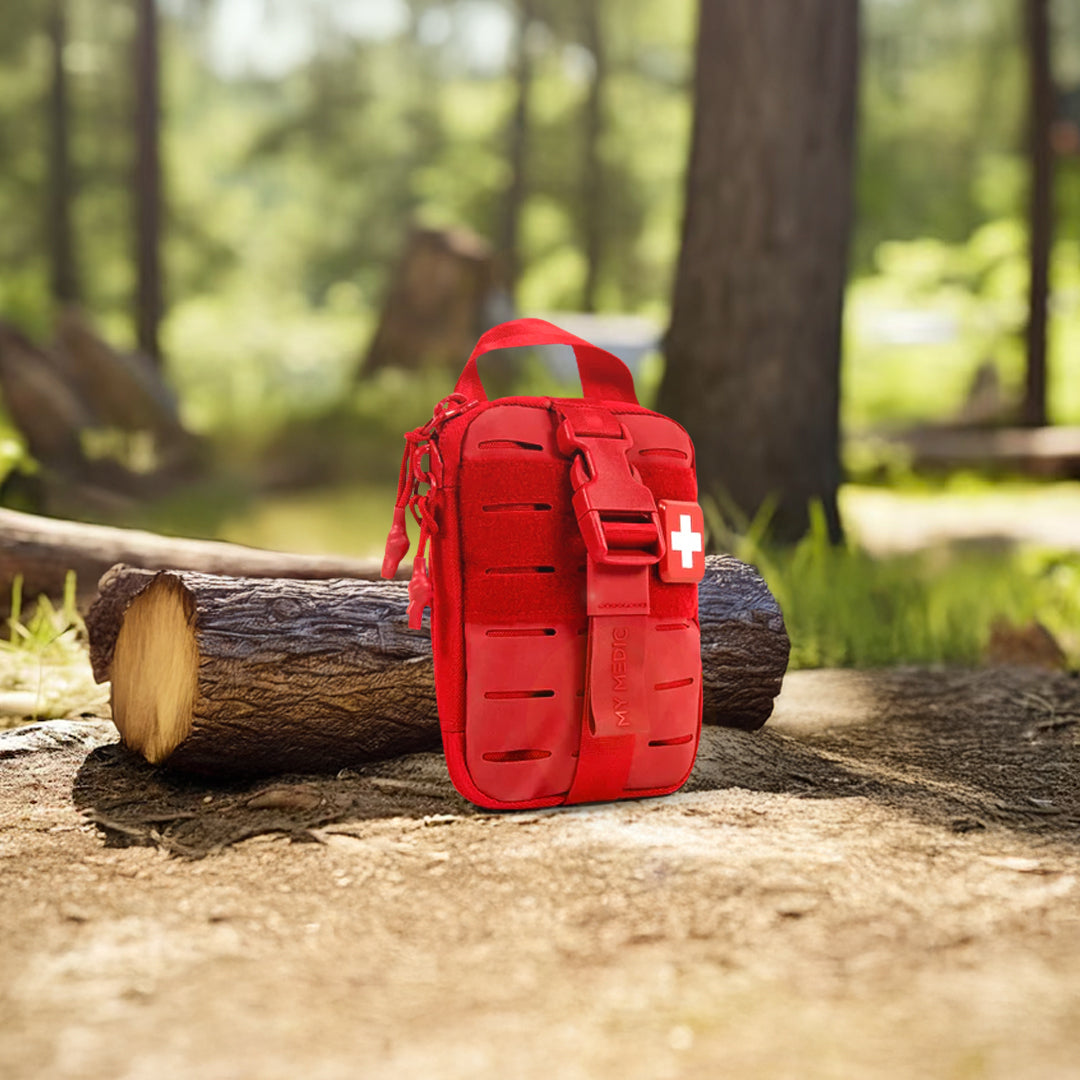
Two jobs belong on every list regardless of season. Swap out water and food that is near its date, and replace batteries in radios, headlamps, and smoke and carbon monoxide alarms. If you are building the core kit from scratch, a go-bag from Survival Kits plus water storage and filtration and a First Aid kit covers most of the year-round list.
The Hazard-Specific Plans for Tornadoes, Floods, Hurricanes, and Winter Storms
Some hazards need more than a paragraph. For tornadoes, our room-by-room guide to the safest place in your house during a tornado ranks every space from basement to bathroom. For floods, our step-by-step guide to protecting your home and family against flooding walks through risk, insurance, and the family plan. For hurricanes, the hurricane kit checklist covers the 7- to 14-day supply. For snow, ice, and cold, the short version is to stay off the roads once a warning is issued, keep heat, layers, and three days of supplies at home, and leave at least five to six seconds of following distance if you have to drive.
Whatever the season, one rule crosses every guide: Portable generators belong outside, a minimum of 20 feet away from any window, door, or attached garage. Carbon monoxide poisoning after storms is common, preventable, and easy to forget when the house is dark and everyone is tired.
The Severe Weather Mistakes That Turn a Storm Into an Emergency
Most storm injuries come from a small set of decisions that seem reasonable in the moment. The first is waiting to see the storm before sheltering, which costs the minutes a warning was meant to give you. The second is relying on a phone alone, then sleeping through a warning with the battery at zero. The third is heading back outside as soon as the rain eases, while lightning can still reach you. The fourth is taking shelter under a tree or a picnic pavilion, which offers no protection from a strike. The last is treating heat as an inconvenience instead of a hazard, especially for older relatives who live alone.
None of this calls for fear or a basement full of gear. It calls for a little quiet work spread across the year: A radio that works, a shelter spot everyone knows, supplies that are current, and a habit of acting on the first warning. Do it before anything goes wrong, and the next storm becomes something your family handles together rather than something that happens to it.
FAQ
What Are the Most Important Severe Weather Safety Tips?
Set up two ways to get warnings, such as a NOAA weather radio and phone alerts. Know where your family shelters for each hazard, keep at least three days of water (a gallon per person per day), food, medications, light, and first aid supplies, and act on warnings instead of waiting to see the storm. Keep any generator outside and 20 feet or more from the house, and check on older relatives during heat waves and cold snaps.
How Do You Stay Safe During a Severe Thunderstorm?
Go inside a sturdy building or a hard-top vehicle at the first thunder, stay away from windows, and wait until 30 minutes after the last thunder before going back out. Avoid corded phones, plumbing, and doors while the storm passes. If you are driving, pull over away from trees and power lines and stay in the vehicle. Treat any downed line as live.
How far away can lightning strike?
Lightning can strike up to 10 miles from a thunderstorm, which is roughly as far as you can hear thunder. That is why the National Weather Service advises going indoors as soon as you hear thunder and staying inside until 30 minutes after the last thunder.
What makes a thunderstorm severe?
The National Weather Service classifies a thunderstorm as severe when it produces hail 1 inch in diameter or larger, about the size of a quarter, or wind gusts of 58 mph or more. Severe thunderstorm warnings are typically issued for 30 to 60 minutes at a time.
How hot does a parked car get in 10 minutes?
According to NHTSA, the inside of a parked car can heat up by about 20°F in 10 minutes, and cracking a window does little to slow it. Never leave a child, an older adult, or a pet in a parked car, even briefly.
What is the difference between a Heat Advisory and an Extreme Heat Warning?
A Heat Advisory means dangerous heat is likely but not severe enough for a warning. An Extreme Heat Warning, the National Weather Service name since March 2025 for what used to be the Excessive Heat Warning, means dangerous heat is expected or occurring. Criteria are set by each local forecast office.