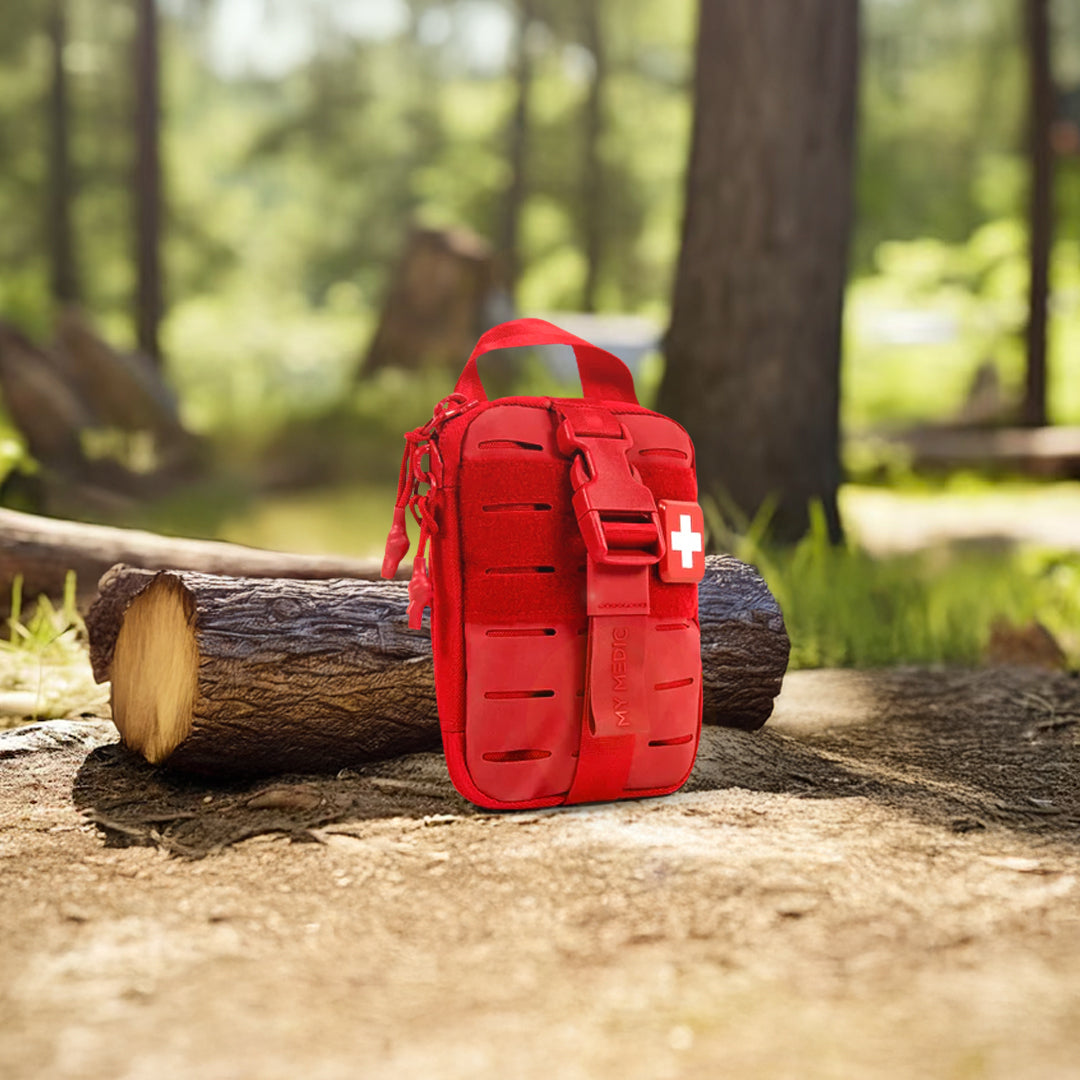
For any hazard, the first 10 minutes of an evacuation should follow a decision order, not an inventory. Minutes 0 to 2: People, pets, medications, and the go bag that is already packed. Minutes 2 to 5: Documents, phone chargers and a backup battery, keys, and cash. Minutes 5 to 10: Water into the car, doors locked, a note saying where you went, and out of the driveway.
Most evacuation lists fail for one simple reason: They are inventories, and nobody runs an inventory with smoke on the ridge or water in the street. Ten minutes is not a dramatic number. It is the real window in the fastest events. In the November 2018 Camp Fire, the blaze was first reported around 6:30 a.m., and the Butte County Sheriff’s Office ordered Paradise and nearby communities to leave. By 8 a.m., embers were falling on Paradise, and most residents had not yet been ordered to evacuate. One Butte County resident told ABC10 he and his wife had five to ten minutes and left with a couple of changes of clothes. In July 2025, the Guadalupe River in Texas rose 26 feet in 45 minutes before dawn, according to state officials.
This evacuation checklist is the cross-disaster version: Any hazard, ten minutes, in the order you actually make decisions. It does not replace the hazard-specific guides. If a hurricane gives you a day or two, our hurricane evacuation checklist covers what to pack and when to go, and our wildfire safety tips cover alerts, smoke, and re-entry. What this guide adds is the sequence for when the warning is short, plus the few things worth doing now so those ten minutes feel calm instead of frantic. The calm version usually depends on a bag that was packed back in September, and if yours was not, the order below still works.
What Should You Grab First in an Evacuation?
Grab people, pets, and medications first, then the go bag that is already packed. Those four take under two minutes if the bag lives by the door and the medications live in one container. Everything after that is ranked by how hard it is to replace and how much it decides your first night away from home, which is why power and documents come before water and the house.
Here is the full ten-minute tree, with the reason for each step and what it costs you to skip it.
|
Minute |
Grab or do |
Why it is here |
If you skip it |
|---|---|---|---|
|
0 to 2 |
Everyone in the house, accounted for by name |
Every other step assumes the head count is done |
You lose minutes searching rooms later, or leave someone behind |
|
0 to 2 |
Pets, leashed or in carriers |
Frightened animals hide fast once they sense commotion |
A cat under the bed can cost you five minutes you do not have |
|
0 to 2 |
Daily medications and medical devices |
Prescriptions are the hardest item to replace on the road |
A missed insulin or heart medication dose turns a hard night into a medical one |
|
0 to 2 |
The packed go bag |
It holds the 72-hour basics so you do not have to think |
You start gathering from scratch with the clock running |
|
2 to 5 |
Documents pouch |
IDs, insurance, and deeds prove who you are and what you owned |
Insurance claims and aid applications stall for weeks |
|
2 to 5 |
Phone chargers and the backup battery or power station |
The phone is your alert channel and your map, and some devices keep people alive |
A dead phone by midnight, and a CPAP or other device with no power |
|
2 to 5 |
Keys and cash in small bills |
Card readers and ATMs fail when the power is out |
You cannot buy fuel or a motel room in an outage zone |
|
5 to 10 |
Water into the car |
One gallon per person per day; a family of four needs 4 gallons for the first day |
Long traffic in heat, or a night in the car, with nothing to drink |
|
5 to 10 |
Lock doors and windows; shut off utilities only if officials tell you to |
A locked house deters looting; gas shut off unnecessarily needs a professional to restore |
Days or weeks without gas at home after you return |
|
5 to 10 |
Leave a note or text your out-of-area contact: When you left and where you are going |
Rescuers and family know not to search the house |
Responders spend time on your home, and relatives cannot find you |
What Should Be on an Evacuation Checklist?
An evacuation checklist should cover the people and animals in your home, medications and medical devices, a packed go bag, a documents pouch, power for phones and medical equipment, keys and cash, water, the car, and a plan for securing the house. The difference between a useful checklist and a stressful one is how much of that list is already done before the alert. If the bag, the pouch, and the battery are ready, the ten minutes become a walk through the house, not a search.
The go bag carries the 72-hour core: Water and a way to treat more, food that needs no cooking, a first aid kit, a light, a radio, layers, and basic tools. You can build one yourself, or start from the Safe Trail go bag, our own 7 lb bag at $109.99, built for one person or one car. Wes, a Safe Trail customer, wrote that he loved “the selection of gear” and that he can clip it to his backpack. For a family, plan one bag per adult or one per car, and keep a written list taped inside the lid so you know what is in it without unpacking it.
If your household has not written down a meeting place and an out-of-area contact, do that first; our emergency preparedness plan guide walks through it, and the disaster preparedness collection covers the rest of the gear by category.
The Power Item Nobody Puts on an Evacuation Checklist
Almost every evacuation list mentions a phone charger. Almost none of them plan for what happens when there is no outlet. Shelters fill fast, hotel rooms disappear, and a night in a car or a gym is common. That is where power decides whether the night is uncomfortable or unsafe: The CPAP user who cannot sleep without it, the insulin that has to stay cool, the phone that is the family’s only map and only alert channel.
A CPAP typically draws 30 to 60 watts, more with the heated humidifier on. For a 10-minute evacuation from a home with a CPAP, the clearest first purchase is the EXP48PRO APEX CPAP battery at $399. It is a 153.6 Wh LiFePO4 battery that ships with the DC cord for your machine, is TSA-compliant, and is rated by its maker for two to three nights when the machine runs on DC with the humidifier and heated tubing turned off, which holds only for lower-draw machines and settings. At the 30 to 60 watts a typical CPAP draws, the same battery covers roughly 2 to 5 hours, so check your machine’s draw before counting on a full night. It weighs about 3 pounds, so it fits in the go bag. Keep it charged and stored next to the machine, so grabbing one means grabbing both.
For a family that needs to keep phones, a laptop, a medical device, and a small cooler running through a 3-day displacement, a station in the 1,000 Wh class is the better fit. The EcoFlow DELTA 3 Classic stores 1,024 Wh in a LiFePO4 battery, delivers 1,800 W, and costs $429. A CPAP running 8 hours at 30 to 60 watts uses 240 to 480 Wh a night, so after inverter losses that is roughly two to three nights of therapy with room left over for phones. At about 27 pounds it rides in the car, not on your back, and at home its 10-millisecond UPS switchover keeps the CPAP running if the grid drops while you sleep.
Documents and Cash: The Two Minutes That Save Weeks Later
Documents feel like paperwork until you need to prove who you are to an insurer or an aid office. Keep one waterproof, fire-resistant pouch with copies of driver’s licenses and passports, insurance policies, the deed or lease, birth certificates, a written medication list for each person, and phone numbers on paper. Photograph everything and store the images in a secure cloud account as a second copy. Add cash in small bills, since card readers and ATMs stop working when the grid does, and change makes paying for fuel easier in a station running on a generator.
Evacuating With Pets: Carrier, Medications, and a Photo for ID
Pets are one of the most common reasons people delay leaving, and the fix is mostly logistics. Keep a carrier or leash where you can reach it in under a minute, a week of pet medications in the same container as your own, and a current photo of each animal on your phone and in the documents pouch. If you are separated, a photo is how a shelter matches a found animal to you. Not every public shelter takes pets, although service animals are admitted to all of them, so know in advance which hotels or friends along your route will take yours. The Safe Pet Kit, in dog and cat editions from $119.99, packs food and water rations, a pet first aid kit, and a document pouch for vet records into one grab.
The Twice-a-Year Go Bag Check That Keeps Ten Minutes Calm
A common pattern is buying a kit, putting it in a closet, and not opening it for years. A bag that was perfect three years ago may now hold expired water, a dead flashlight, and clothes your children have outgrown. Check it twice a year; the change to and from daylight saving time is an easy reminder.
These are the items that quietly expire or stop fitting.
|
Item |
What changes |
What to do at each check |
|---|---|---|
|
Water |
Stored tap water goes stale; bottled water carries a date |
Replace stored tap water every six months; rotate bottled water by its date |
|
Medications |
Prescriptions and doses change |
Swap in current medications and update the written list |
|
Batteries |
Alkaline cells can leak and lose charge |
Test lights and the radio; replace spares, or switch to lithium cells |
|
Power banks and stations |
Lithium batteries slowly self-discharge |
Top up to full and confirm the CPAP cord still fits the machine |
|
Clothing |
Children grow, and seasons change |
Swap in current sizes and weather-appropriate layers |
|
Pet supplies |
Food expires and medications change |
Replace food and medications; update the pet’s photo |
The Evacuation Mistakes That Cost Families Their Ten Minutes
Most evacuation problems come from a few decisions that feel sensible in the moment. The first is treating the checklist as something you will read on the day, instead of something you finish beforehand. The second is waiting for the official order when you can already see the danger; in the Camp Fire, embers were falling on Paradise before most residents had been ordered to leave. The third is packing food and clothes but no power, then spending the first night hunting for an outlet for the CPAP or the phone. The fourth is a bag that has not been opened since it was bought. The last is going back for one more thing, which is how a ten-minute exit turns into twenty.
Real preparedness is the quiet work of being the person your family can rely on when the phone buzzes with an evacuation order. None of it is dramatic. It is a bag by the door, a charged battery next to the CPAP, a pouch of documents, and a plan everyone has heard once, all done before anything goes wrong. Start with power for a 10-minute evacuation, add a Safe Trail go bag for each car, and the decision tree above will do the rest.
FAQ
What Should You Grab First in an Evacuation?
Grab people, pets, and medications first, then the go bag that is already packed. In minutes 2 to 5, take the documents pouch, phone chargers and a backup battery, keys, and cash. In minutes 5 to 10, load water at one gallon per person per day, lock the house, shut off utilities only if officials tell you to, and leave a note saying when you left and where you are going.
What Should Be on an Evacuation Checklist?
An evacuation checklist should cover everyone in the household, pets, medications and medical devices, a packed go bag, a documents pouch, power for phones and medical equipment, keys and cash, water, the car, and securing the house. Organize it by minute rather than by category, so the most important items leave first if time runs short.
How much time do you usually have to evacuate?
It depends on the hazard. A hurricane often gives a day or two of warning, while wildfires and flash floods can give minutes. In the 2018 Camp Fire, embers were falling on Paradise about 90 minutes after the fire was first reported, before most residents had been ordered out, and one resident described having five to ten minutes to get out. In July 2025, the Guadalupe River in Texas rose 26 feet in 45 minutes. Plan for ten minutes.
What if you have no go bag packed when the order comes?
Follow the same order with whatever bag you have: People, pets, and medications, then documents, chargers, keys, and cash, then water. A pillowcase or laundry basket works. Do not spend time gathering food, clothes, or valuables beyond what you can carry in one trip, and leave once the ten minutes are up.
Should you take food when you evacuate?
Take the shelf-stable food already in your go bag, but do not spend evacuation minutes collecting more. Water and medications matter far more in the first hours. Plan on one gallon of water per person per day, which is 4 gallons for a family of four for the first day.
Should you take one car or two when you evacuate?
Take one car per household when you can, since fewer vehicles mean less congestion on evacuation routes. Keep the tank at least half full at all times and fill it completely when an evacuation seems likely, as Ready.gov advises, and back the car into the driveway so you can leave without turning around.