When a hurricane evacuation order comes, take documents, medications, water, food, cash, phone chargers and a power bank, clothing, and pet supplies, all packed in advance in one bag per person. Leave as soon as an order is issued for your zone, and do not wait for it to be upgraded from voluntary to mandatory, because roads jam and fuel runs out quickly. The decision to go is about storm surge and flooding, not wind speed: The old rule is to run from water and hide from wind.
Evacuation is the part of hurricane preparedness that people put off thinking about, because it feels like the dramatic option. In practice it is usually an ordinary, slightly tedious drive that you make a day earlier than feels necessary, to a hotel or a relative's house sixty miles inland. The families who struggle are almost always the ones who waited to see what the storm would do.
This covers the two questions that matter when the forecast turns: What to take, and when to leave. Pack the first part now, in the quiet part of the season, so the second part is only a decision and not a scramble.
What Should I Take When Evacuating for a Hurricane?
Take one go-bag per person containing documents, medications, water, food, cash, phone chargers and a power bank, clothing, hygiene supplies, and a flashlight, plus pet supplies and anything irreplaceable. The guiding rule is that you are packing for three to seven days away from home, with the possibility that the home you return to is damaged or without power. Documents and medications are the two categories you cannot replace on the road, so they go in first.
Here is the full list, in the order it should go in the car.
|
Priority |
What to take |
Why |
|---|---|---|
|
Documents |
IDs, insurance policies, deeds, medical records, and prescriptions in a waterproof folder, plus digital copies |
Insurance claims and medical care depend on paperwork you cannot re-obtain quickly |
|
Medications |
A two-week supply, plus a cooler for anything refrigerated |
Pharmacies in the storm path close and stay closed |
|
Cash |
Small bills, enough for several days of fuel, food, and lodging |
Card readers and ATMs fail across the whole affected region |
|
Water and food |
Water for the drive plus a few days, and no-cook food that needs no preparation |
Traffic can turn a two-hour drive into ten, with closed stores along the way |
|
Power and comms |
Phone chargers, a car charger, a power bank, and a NOAA radio |
Your phone is your map, your news, and your contact with family |
|
Clothing and bedding |
Three to seven days of clothes, sturdy shoes, rain gear, blankets or sleeping bags |
Shelters do not supply bedding, and you may be gone longer than planned |
|
Hygiene and first aid |
A first aid kit, toiletries, sanitizer, and supplies for infants or elderly family |
Basic comfort and health over a week away from home |
|
Pets |
Carrier, food, water, leash, medications, and vaccination records |
Many shelters and hotels require proof of vaccination |
|
Irreplaceables |
Photos, heirlooms, a hard drive or backup of family files |
The only items that truly cannot be bought again |
|
Vehicle readiness |
Full fuel tank, paper maps, jump starter, tire tools, and a phone mount |
Fuel and roadside help are both scarce during an evacuation |
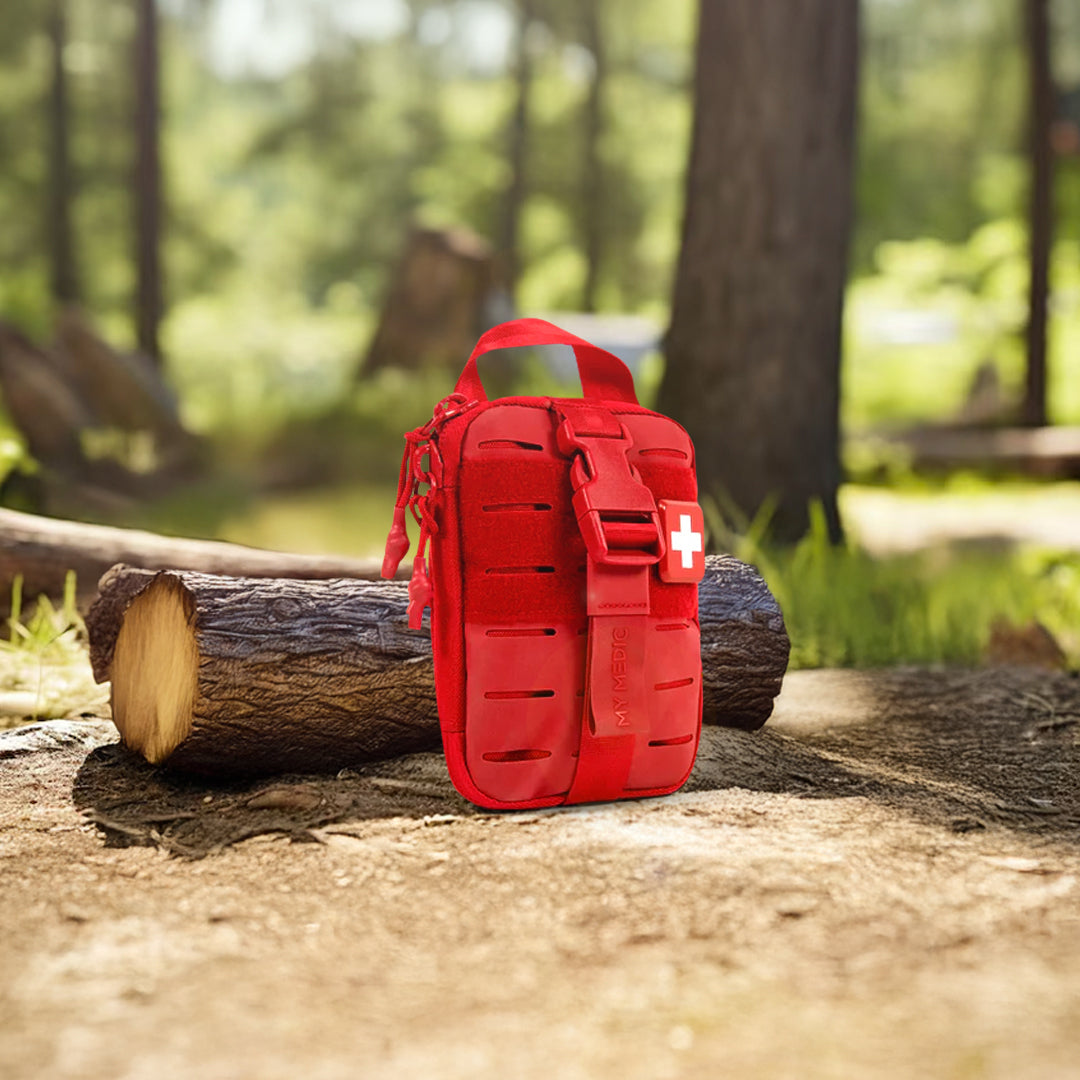
Assemble the bags from a ready-made survival kit plus First Aid, Power & Light, Emergency Radios, and Food Rations, and keep the vehicle side stocked from roadside emergencies.
What not to bring matters too. Keep the load light enough that everyone can carry their own bag, leave furniture and bulky valuables behind, and never pack fuel cans inside the passenger compartment.
When Should I Evacuate for a Hurricane?
Evacuate as soon as officials issue an order for your zone, and leave voluntarily even earlier if you are in a storm surge zone, a mobile home, or a low-lying area. Do not wait for a voluntary order to become mandatory, because that upgrade usually comes when traffic is already heavy and fuel is already short. In practice, that means leaving roughly 48 to 72 hours before landfall rather than in the final day.
The critical thing to understand is what the decision is actually based on. Evacuation orders are driven by storm surge and flooding, not by wind speed or category number, because surge is the deadliest hazard in a hurricane. That is the reasoning behind the old coastal rule: Run from water, hide from wind. A well-built inland house can handle strong wind with the family sheltering inside, while no house is safe with several feet of water moving through it.
Evacuation is also shorter than most people assume. You are usually trying to get out of the surge zone, which can mean tens of miles inland rather than several states away, so a hotel or a friend's home a county or two inland is often the right destination. Know your evacuation zone before the season, since coastal counties publish zone maps and issue orders by zone, and check it now rather than during a forecast.
Leave earlier than the order if anyone in the household has mobility limitations, medical equipment that needs power, or a pet that complicates lodging, and if you have no safe vehicle or destination, contact local emergency management in advance to arrange transport rather than waiting for the last day.
The Evacuation Timeline
The work divides cleanly across the days before landfall, and almost none of it should be happening on the last one.
Before the season, know your zone, choose a destination and a route, agree on an out-of-state contact everyone can call, and pack the go-bags. At 72 hours out, fill the fuel tank, withdraw cash, refill prescriptions, and confirm your destination. At 48 hours, load the car, photograph the house and its contents for insurance, and secure outdoor items. At 24 hours or once an order is issued for your zone, shut off utilities if instructed, lock up, and go. Tell someone outside the area your route and destination before you pull out of the driveway.
On the road, expect the drive to take several times longer than normal, stay on the designated evacuation route rather than a shortcut that may be flooded, and never drive through standing water, since most flood deaths happen in vehicles.
The Mistakes That Make Evacuation Dangerous
Waiting to see what the storm does is the first and worst. Forecast tracks shift, and by the time a wobble becomes a certainty, the roads are full and the fuel is gone. Leaving without documents and medications is the second, and it turns a rough week into months of administrative misery. Driving with the fuel light on is the third, because stations along evacuation routes run dry and power outages stop the pumps that still have fuel.
The rest are quieter. People take unfamiliar shortcuts and find flooded roads, they leave pets behind assuming they will return in a day, they forget to tell anyone where they are going, and they return home too early, before officials have reopened the area and while downed lines and contaminated water are still hazards. Wait for the official all-clear, and treat every downed wire as live.
An evacuation you prepared for is mostly a long, dull drive. Know your zone, keep the go-bags packed and the documents ready, decide your destination before the season starts, and then leave early when the order comes, without negotiating with the forecast. That is the quiet work that turns the worst day of a storm season into an inconvenience, sorted out before anything goes wrong.
FAQ
What should I take when evacuating for a hurricane?
Take one go-bag per person with documents in a waterproof folder, a two-week medication supply, water and no-cook food, cash in small bills, phone chargers and a power bank, three to seven days of clothing and bedding, hygiene and first aid supplies, and a flashlight. Add pet carriers, food, and vaccination records, plus irreplaceable items such as photos and family files. Leave with a full fuel tank and keep the load light enough that everyone can carry their own bag.
When should I evacuate for a hurricane?
Leave as soon as officials issue an evacuation order for your zone, and go voluntarily even earlier if you are in a storm surge zone, a mobile home, or a low-lying area. That usually means departing 48 to 72 hours before landfall rather than in the final day, because roads jam and fuel runs out once an order is upgraded to mandatory. Evacuation decisions are based on storm surge and flooding rather than wind speed, which is why the coastal rule is to run from water and hide from wind.
How far do I need to evacuate for a hurricane?
Usually tens of miles rather than hundreds. The goal is to get out of the storm surge and flood zone, so a hotel or a relative's home a county or two inland is often far enough. Driving several states away adds hours of traffic risk without adding much safety. Choose the destination and route before the season, and use the designated evacuation route rather than a shortcut that may be flooded.
Should I evacuate if the order is only voluntary?
In most cases yes, especially if you are in a surge zone, a mobile home, or a low-lying area, or if anyone in the household has mobility limitations or medical equipment that needs power. A voluntary order is the window when roads are still clear and fuel is still available, and waiting for it to become mandatory means leaving in heavy traffic with fewer options. Follow the guidance of your local emergency management officials.
What should I do with my house before evacuating?
Photograph or video the house and its contents for insurance, secure or bring in outdoor furniture and loose items, close and protect windows if you have shutters or panels, and shut off utilities if officials instruct you to. Move valuables to upper floors where possible, lock up, and take your documents with you. Tell someone outside the area your route and destination before you leave.