A tornado watch means conditions are favorable for tornadoes to form, so stay alert and get ready to move. A tornado warning means a tornado has been spotted or indicated on radar near you, so take shelter immediately. Watches come from the Storm Prediction Center, cover large areas, and last several hours. Warnings come from your local National Weather Service office, cover a small storm-based area, and typically last 30 to 60 minutes.
The two words sound almost interchangeable, and that is the problem. Plenty of people hear “tornado watch” on the radio and assume it means a tornado has been seen, while others hear “warning” and treat it as one more alert to keep an eye on. Mixing them up costs time in the one situation where minutes matter.
The distinction is simple once it clicks: A watch is about conditions, and a warning is about a tornado. This guide explains each alert, what to do the moment you hear it, where to shelter depending on where you are, and how to make sure you still get the alert if the power and cell service go down.
What Is the Difference Between a Tornado Warning and a Tornado Watch?
The difference is certainty and urgency. A tornado watch is a forecast: The atmosphere over a broad region is set up in a way that could produce tornadoes, so you should get ready. A tornado warning is an observation: A tornado is happening or about to happen in a specific area, either seen by trained spotters or detected by radar, so you should act now.
The table below lays out the two alerts side by side.
|
Tornado watch |
Tornado warning |
|
|---|---|---|
|
What it means |
Conditions are favorable for tornadoes to develop |
A tornado has been spotted or indicated by radar |
|
Issued by |
The Storm Prediction Center in Norman, Oklahoma |
Your local National Weather Service forecast office |
|
Area covered |
A large region, often many counties or parts of several states |
A small, storm-based polygon along the tornado’s projected path |
|
How long it lasts |
Several hours, commonly four to eight |
Typically 30 to 60 minutes |
|
Your action |
Get ready: Check your kit, clear the path to shelter, and monitor alerts |
Take shelter immediately, without waiting for confirmation |
One detail catches people out: A warning does not need a watch first. Tornadoes sometimes develop faster than forecasters expected, and a local office can issue a warning with no watch in effect, so never treat the absence of a watch as a reason to ignore a warning.
What to Do When a Tornado Watch Is Issued
A watch is your window to get ready while there is still time to think. Nothing needs to be dramatic, but a few minutes of quiet work during a watch can save the minutes you will not have once a warning arrives.
Turn on a NOAA weather radio and keep a phone with emergency alerts enabled charged and nearby. Confirm the name of your county and nearby towns, since warnings list affected locations by name. Make sure the path to your shelter is clear and that the shelter itself is stocked with water, headlamps, a first aid kit, and helmets. Bring pets inside, put shoes on everyone in the house, and decide in advance who carries the youngest children and the pets. If you live in a mobile home, use the watch to move to a sturdier building before storms arrive.
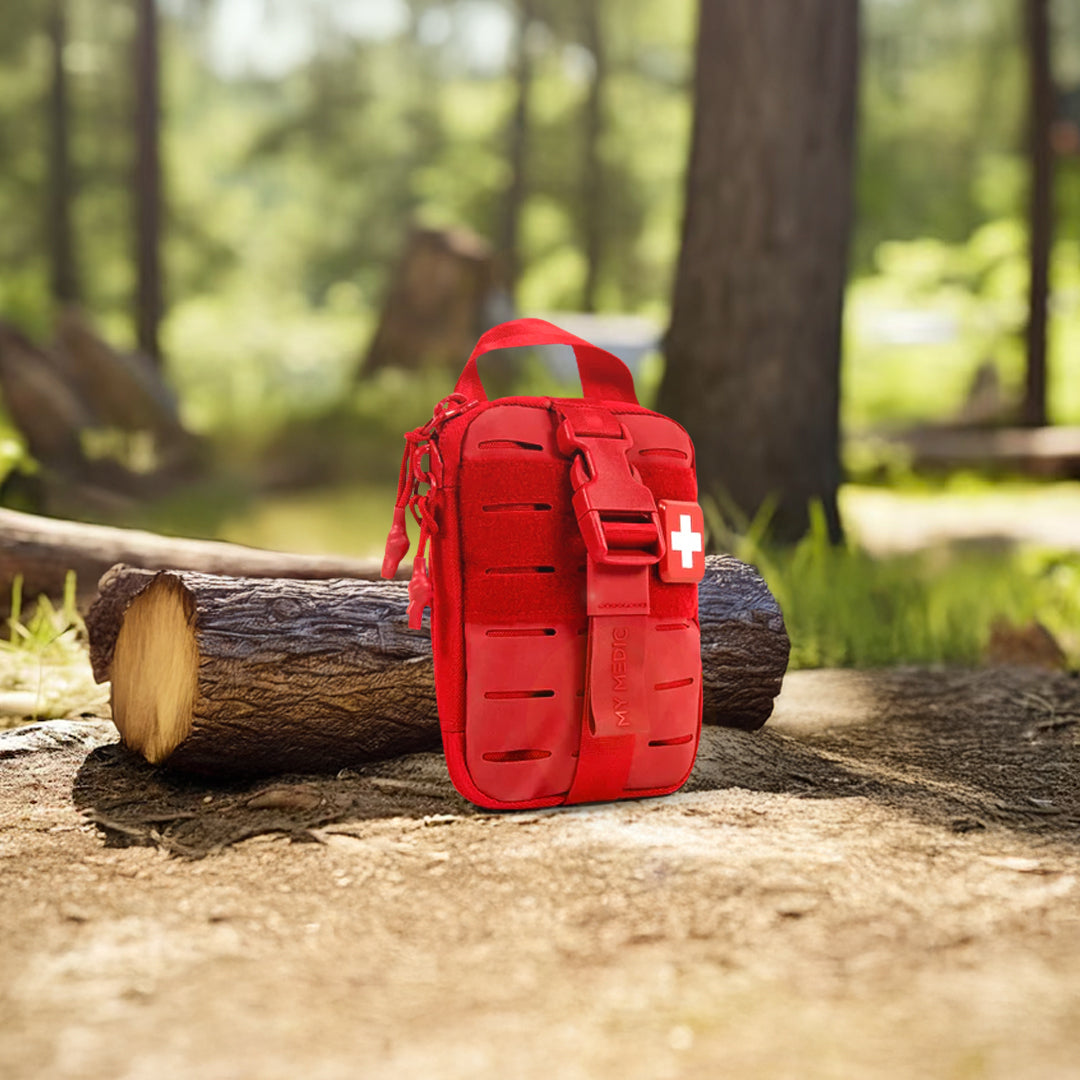
If your shelter kit is not already in place, a ready-made survival kit and a set of First Aid supplies cover the essentials, and headlamps and power banks from Power & Light keep you working in the dark.
What Should I Do During a Tornado Warning?
During a tornado warning, go to your safe place immediately: The lowest floor of a sturdy building, in an interior room or hallway with no windows, such as a basement, storm shelter, or interior bathroom or closet. Get under something sturdy if you can, and protect your head and neck with your arms, a helmet, a mattress, or heavy blankets. Stay there until the warning for your area expires or officials give an all-clear.
Do not go outside to look for the tornado, and do not wait to hear a siren or see a funnel before moving. Many tornadoes are wrapped in rain or arrive at night, and outdoor sirens are designed to alert people outside, so you may not hear them indoors at all. If the warning covers your location, the decision is already made.
Where to Shelter During a Tornado Warning, by Location
The right move depends on where you are when the warning hits, and a few common instincts are exactly wrong. Here is the safest option for each situation.
|
Where you are |
What to do |
|---|---|
|
Home with a basement or safe room |
Go there immediately, get under sturdy furniture or a staircase, and cover your head |
|
Home without a basement |
Go to an interior room on the lowest floor, away from windows, such as a bathroom, closet, or hallway |
|
Mobile or manufactured home |
Leave and go to a sturdy building or storm shelter, since mobile homes offer little protection even when tied down |
|
Office, school, or store |
Follow the building’s shelter plan, or go to an interior hallway or restroom on the lowest floor |
|
In a vehicle |
If you can safely drive to a sturdy building, do it; otherwise park, keep your seatbelt on, and get below the windows with your head covered |
|
Outdoors with no shelter |
Lie flat in a low area away from trees and vehicles and cover your head; never shelter under a highway overpass |
The overpass rule matters because it feels intuitive and is not. An overpass can funnel wind and debris and leaves you exposed above ground level, which makes it one of the most dangerous places to wait out a tornado.
PDS Watches and Tornado Emergencies: The Alerts That Signal Higher Danger
Two additions to the standard alerts tell you the threat is unusually severe. A watch or warning marked “Particularly Dangerous Situation,” or PDS, means forecasters have high confidence in strong or violent tornadoes, not just the possibility of one. Treat a PDS watch as a reason to finish every preparation immediately.
A tornado emergency is the most serious wording the National Weather Service uses. It is reserved for a confirmed large tornado moving into a populated area with severe damage expected. If you hear those words for your location, you should already be in your shelter with your head protected.
Getting Tornado Alerts When the Power and Cell Service Fail
Tornado alerts often arrive in the middle of storms that are already knocking out power and overloading cell networks, which is exactly when people miss them. Relying on a single source, especially outdoor sirens or a television, leaves a dangerous gap.
The most reliable layer is a NOAA weather radio with SAME alerts programmed to your county, because it receives warnings directly from the National Weather Service and sounds an alarm even in the middle of the night. A hand-crank and solar model from Emergency Radios keeps working without batteries or grid power. Add wireless emergency alerts on every phone in the house, and keep a charged power bank so those phones survive a long outage. Two independent alert sources are the minimum, so that one failure never leaves you uninformed before anything goes wrong.
The Tornado Alert Mistakes That Cost People Precious Minutes
Most tornado injuries in homes that had warning come down to the same handful of decisions, and every one of them is about timing rather than equipment.
The first is treating a watch as background noise and doing nothing until a warning arrives, which leaves you clearing a cluttered basement in the dark. The second is waiting for visual confirmation, stepping outside to look, or waiting for a siren. The third is sheltering in a mobile home or vehicle when a sturdy building is reachable. The fourth is leaving the shelter as soon as the wind calms, when a lull can be the gap between storms and the warning is still active. The last is depending on a single alert source that fails when the power does. None of these cost money to fix, and that is the point: Real preparedness for tornadoes is mostly knowing the difference between the two alerts and acting on the right one.
FAQ
What Is the Difference Between a Tornado Warning and a Tornado Watch?
A tornado watch means conditions are favorable for tornadoes to form in a large area, so you should get ready and monitor alerts. A tornado warning means a tornado has been spotted or indicated by radar in a specific area, so you should take shelter immediately. Watches are issued by the Storm Prediction Center and usually last several hours, while warnings are issued by your local National Weather Service office for a small storm-based area and typically last 30 to 60 minutes.
What Should I Do During a Tornado Warning?
Go to your safe place immediately: The lowest floor of a sturdy building, in an interior room or hallway with no windows, such as a basement, storm shelter, or interior bathroom or closet. Protect your head and neck with your arms, a helmet, a mattress, or heavy blankets. Do not go outside to look or wait for a siren, and if you are in a mobile home, leave for a sturdy building. Stay sheltered until the warning expires or officials give an all-clear.
How long does a tornado warning last?
A tornado warning typically lasts 30 to 60 minutes and covers a small, storm-based area along the tornado’s projected path. It can be extended or reissued if the storm continues, and new warnings may follow on active days. Stay in your shelter until the warning for your specific area has expired or officials announce an all-clear, not just until the wind sounds calmer.
How long does a tornado watch last?
A tornado watch usually lasts several hours, commonly four to eight, and covers a large region that can span many counties or parts of several states. The Storm Prediction Center can cancel it early if conditions weaken or extend it if the threat continues. Use the watch period to check your shelter kit, charge phones, and make sure everyone knows where to go.
Can a tornado warning be issued without a tornado watch?
Yes. A local National Weather Service office can issue a tornado warning even when no watch is in effect, because tornadoes sometimes develop faster or in places forecasters did not expect. Never treat the absence of a watch as a reason to ignore a warning, and keep a NOAA weather radio and phone alerts active whenever storms are in the area.