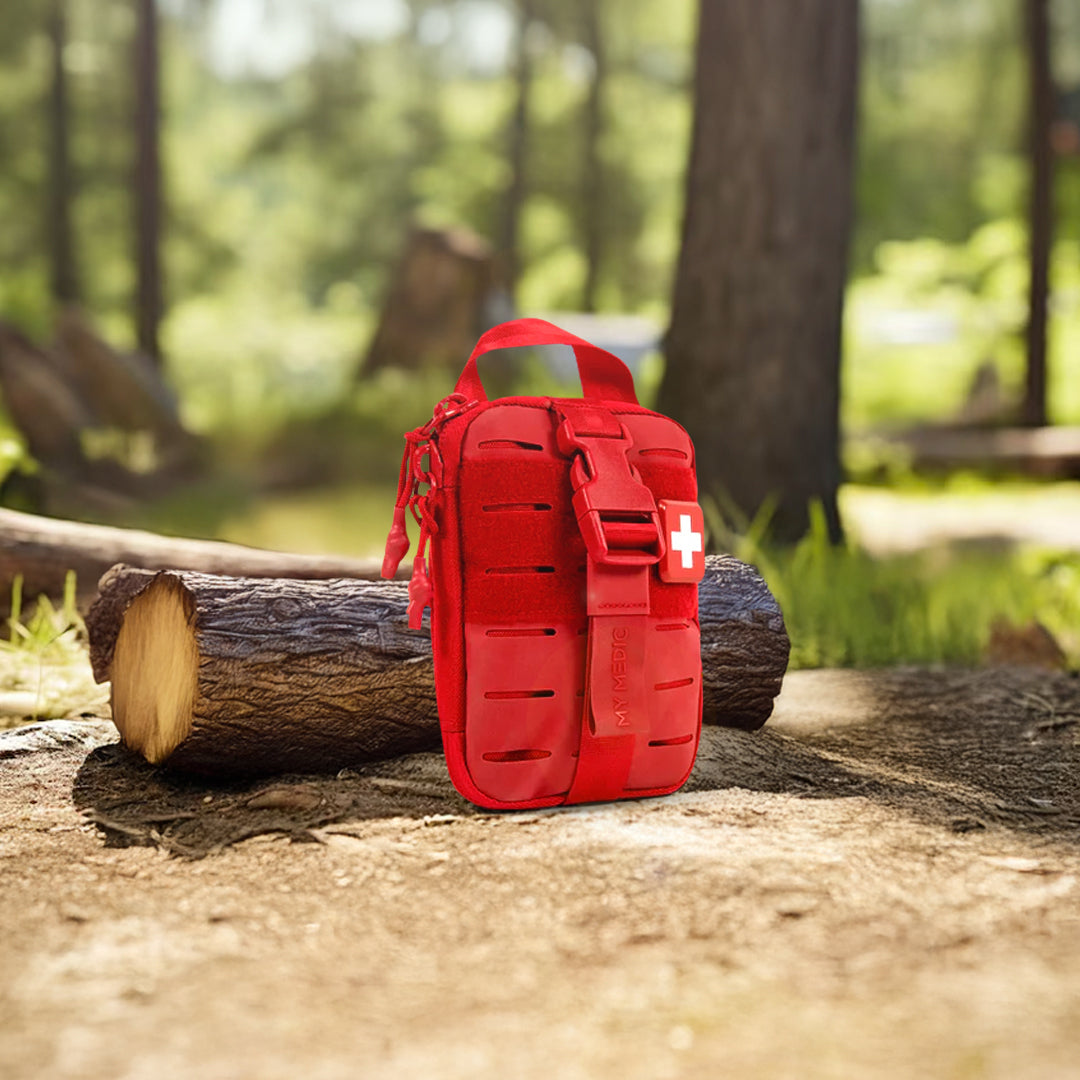
A Florida hurricane kit needs two weeks of water, food, and medications, plus the gear a standard kit often skips: Heat relief for days without air conditioning, insect repellent, flood and mold cleanup supplies, window protection, and insurance documents in a waterproof folder. Florida’s heat, flat terrain, and storm surge make outages and evacuations last longer here, so plan for 14 days, know your evacuation zone, and stock up early.
Most hurricane checklists are written for anywhere with a coastline. Florida is not anywhere. The state sits almost entirely at low elevation, it is surrounded by warm water on three sides, and its hurricane season runs from June 1 through November 30, with the most active stretch from mid-August into October. That combination means Florida storms tend to bring long outages in extreme heat, flooding that lingers, and evacuation orders that cover huge numbers of people at once.
A kit that would carry a family through three days of a Midwest ice storm falls short here. This is the Florida version, built for the Gulf Coast and the Atlantic Coast alike, and for the specific problems that show up after a Florida landfall.
What Should Be in a Florida Hurricane Kit?
A Florida hurricane kit covers the same core categories as any emergency kit, scaled to two weeks, plus the Florida-specific additions that make a hot, wet, powerless house livable. The table below lists what to pack, with the Florida reason for each.
|
Category |
What to pack |
The Florida reason |
|---|---|---|
|
Water |
One gallon per person per day for 14 days, a water filter, and a bathtub liner |
Boil-water notices are common after Florida storms, and well pumps stop without power |
|
Food |
Fourteen days of no-cook, shelf-stable food and a manual can opener |
Power restoration after a major Florida landfall routinely takes more than a week |
|
Heat relief |
Battery fans, cooling towels, electrolyte packets, and extra water for heat |
Days without air conditioning in August heat are a real health risk, especially for older adults and children |
|
Insect protection |
Insect repellent and window screens that stay in place |
Standing water after a storm brings mosquitoes within days |
|
Power and light |
Power banks, a portable power station, folding solar panels, and headlamps |
Fuel lines form fast, and solar recharging works in Florida’s strong sun |
|
Communication |
A NOAA hand-crank and solar radio, plus two-way radios |
Cell towers fail across wide areas, and local alerts change quickly |
|
First aid and meds |
A full first aid kit, a two-week medication supply, and a cooler plan for insulin |
Pharmacies close, and cuts from debris cleanup are common |
|
Flood and mold cleanup |
Gloves, boots, masks, bleach, trash bags, and a wet-dry vacuum if you have one |
Wet materials in Florida humidity grow mold within 24 to 48 hours |
|
Home protection |
Shutters or pre-cut plywood, tarps, rope, and tie-down straps |
Window and roof damage lets the next rain band ruin the interior |
|
Documents |
Insurance policies, IDs, and home photos in a waterproof folder, plus cash |
Insurance claims move faster with documentation, and card readers fail with the grid |
Build the core from water storage and filtration, Food Rations, Power & Light, Emergency Radios, and First Aid, or start with a ready-made survival kit and scale it to 14 days.
How Is a Florida Hurricane Kit Different From a Standard Kit?
A Florida hurricane kit differs from a standard kit in four ways: It is built for two weeks instead of three days, it plans for extreme heat without air conditioning, it plans for flooding and mold rather than only wind, and it is organized around a known evacuation zone. Each one comes from how Florida storms actually play out.
Duration comes first. Standard guidance starts at 72 hours, but Florida landfalls regularly knock out power and water for a week or longer across entire counties, and resupply is slow when roads, bridges, and stores are all affected at the same time. Fourteen days is the realistic Florida baseline, which is why every quantity in the table above is doubled or more compared with a general kit.
Heat is the second difference, and it is the one people underestimate. A northern outage is uncomfortable; a Florida outage in August, with indoor temperatures climbing past 90 degrees, is a medical risk. Battery fans, extra drinking water, and electrolytes matter here in a way they do not elsewhere, and a portable power station that can run a fan through the night is worth more in Florida than almost anywhere in the country.
Water is the third. Florida is flat, low, and often saturated, so flooding from rain and surge lingers, and humidity turns anything wet into a mold problem within a day or two. A Florida kit carries cleanup supplies as standard. The fourth difference is evacuation: Florida organizes evacuations by lettered zones, and knowing yours before the season is part of the kit, not an afterthought.
Gulf Coast vs Atlantic Coast: How Storm Surge Changes the Plan
Where you live in Florida changes what your biggest threat is. The Gulf Coast sits along a wide, shallow continental shelf, which allows a hurricane to pile up exceptionally high storm surge. That is why Gulf landfalls have produced some of the most destructive surge in recent memory, from the Panhandle to the Big Bend to Southwest Florida. If you live on the Gulf side in a surge zone, evacuation is the core of your plan, and the kit has to be ready to travel.
The Atlantic Coast generally has a narrower shelf, so surge is often lower, but barrier islands, causeways, and low-lying neighborhoods still flood, and wind and heavy rain do widespread damage. Bridges to barrier islands close as winds rise, so island residents may need to leave earlier than the mainland. On either coast, the rule is the same: Run from water, hide from wind. Check your zone on your county’s emergency management site or at FloridaDisaster.org before June, and treat an evacuation order for that zone as a decision already made.
Florida Hurricane Supplies Are Now Tax-Free Year-Round
Florida used to run a short disaster-preparedness sales tax holiday each year. That changed in 2025, when the state made the exemption permanent for many qualifying supplies starting August 1, 2025, so there is no need to wait for a special week in 2026. Items on the permanent list include common batteries, portable generators, smoke and carbon monoxide detectors, fire extinguishers, life jackets, portable fuel cans, sunscreen, and insect repellent.
Not everything carried over. Several items that were included in past holidays, such as flashlights, candles, and coolers, are no longer on the exemption list. The Florida Department of Revenue publishes the official list of qualifying items and any limits, so check it before a big purchase. This is general information, not tax advice. The practical upside is real, though: You can build and restock a Florida kit in the quiet months instead of crowding into stores during a tax week or a forecast.
Protecting a Florida Home Before Landfall
A Florida hurricane kit protects the house as well as the people in it, and most of that work happens before the season. Install or test shutters, or cut and label plywood for every window ahead of time, since plywood sells out quickly once a storm is forecast and tape on glass does nothing. Photograph and video every room and the exterior for insurance, and store the files off the phone.
Check flood coverage early. Standard homeowners policies do not cover flood damage, and a new National Flood Insurance Program policy generally has a 30-day waiting period before it takes effect, so buying one when a storm appears is usually too late. When a storm is forecast, bring in or tie down anything that can become debris, leave the pool full rather than draining it, since an empty pool can shift or lift out of the ground, and switch off the pool pump and other outdoor electrical equipment.
The Florida Hurricane Mistakes That Cost Homeowners the Most
The expensive Florida mistakes are rarely about missing gear. They are about timing and assumptions, and each one has repeated through recent seasons.
Planning for three days in a state where two weeks is normal is the most common, and it runs families out of water and fuel at exactly the moment resupply is hardest. Running a generator in a garage or near an open window is the most dangerous, since carbon monoxide deaths reliably follow Florida storms. A battery power station is the safe choice for anything you need to run indoors.
The rest are costly in slower ways: Assuming homeowners insurance covers flood when it does not, not knowing your evacuation zone until an order is issued, riding out a storm in a surge zone because the last one was not so bad, and returning home before officials reopen the area. Real preparedness in Florida is not about the biggest stockpile. It is the quiet habit of doing the dull things in May, so the house, the paperwork, and the kit are ready before anything goes wrong.
FAQ
What Should Be in a Florida Hurricane Kit?
A Florida hurricane kit should include one gallon of water per person per day for 14 days, a water filter, two weeks of no-cook food, a two-week medication supply, a NOAA radio, power banks and a portable power station, and first aid supplies. Add the Florida-specific items: Battery fans and electrolytes for days without air conditioning, insect repellent, flood and mold cleanup supplies, window protection, and insurance documents and home photos in a waterproof folder.
How Is a Florida Hurricane Kit Different From a Standard Kit?
A Florida hurricane kit is built for 14 days instead of the standard 72 hours, because Florida landfalls commonly cut power and water for a week or more. It also plans for extreme heat without air conditioning, adds flood and mold cleanup supplies because low, humid terrain keeps water around, and is organized around your lettered evacuation zone. Gulf Coast surge zones in particular make evacuation readiness central to the plan.
How much water does a Florida family of four need for a hurricane?
Plan on one gallon per person per day for 14 days. For a family of four that is 4 gallons a day, or 56 gallons for two weeks. Florida heat without air conditioning pushes drinking needs higher, so round up, and add water for pets. Fill the bathtub and large containers when a storm is forecast for washing and flushing, and keep a filter for water collected after the storm.
Are hurricane supplies tax-free in Florida in 2026?
Many are. Florida made its disaster-preparedness sales tax exemption permanent in 2025, starting August 1, 2025, so qualifying items such as common batteries, portable generators, smoke and carbon monoxide detectors, fire extinguishers, life jackets, fuel cans, sunscreen, and insect repellent are tax-free year-round rather than during a short holiday. Some items from past holidays, including flashlights, candles, and coolers, are no longer exempt. Check the Florida Department of Revenue list for current qualifying items and limits.
When is hurricane season in Florida?
Florida’s hurricane season runs from June 1 through November 30, with the most active period from mid-August into October. Storms can form outside that window, but the practical advice is to have your kit built, your evacuation zone confirmed, and your flood coverage in place before June 1, since a new flood insurance policy typically takes 30 days to become active.