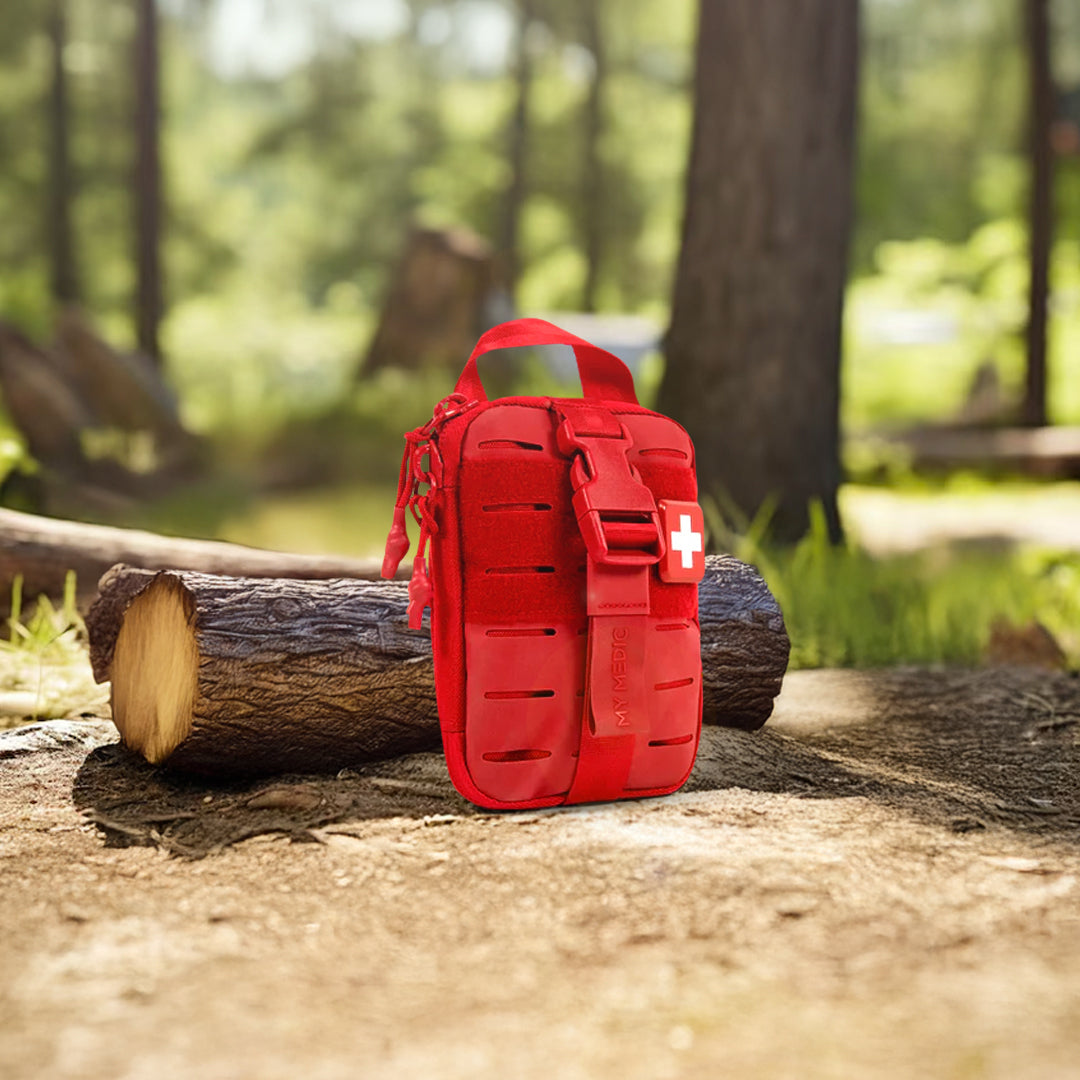
A power outage kit should cover light, power, information, water, no-cook food, warmth or cooling, first aid, and a way to keep your fridge cold: headlamps and lanterns, power banks and a portable power station, a hand-crank NOAA radio, stored water and a filter, ready-to-eat food, coolers and ice, and cash. Plan for at least 72 hours, and keep it where you can find it in the dark before the lights go out.
Most power outages are short and forgettable. The ones that are not, a storm, an ice event, a heat wave that overloads the grid, are exactly why you want a power outage kit already packed. The goal is simple: keep the lights on, the phones charged, the food safe, and the family comfortable and informed until the power comes back, without a single trip to a store that is also dark. This is what belongs in that kit, how long it should carry you, and the mistakes that turn a manageable outage into a bad night.
What Should Be in a Power Outage Kit?
The nine categories below are the checklist. What separates a kit that works from a pile of gear is that each piece assumes the others have failed: the radio does not need the cell network, the lighting does not need the grid, and the food does not need the stove. Here is the full checklist.
|
Category |
What to have |
Why |
|---|---|---|
|
Light |
Headlamps, lanterns, flashlights, and spare batteries |
Hands-free light first; skip candles, which are a fire risk |
|
Power |
Power banks, a portable power station, and solar or car charging |
Keep phones and essentials running |
|
Information |
A NOAA hand-crank and solar radio |
Stay informed when the cell network is down |
|
Water |
Stored water and a filter |
An outage can stop a well pump or affect municipal water |
|
No-cook food |
Shelf-stable, ready-to-eat food and a manual can opener |
You may not be able to cook on an electric stove |
|
Keeping food cold |
Coolers, ice or ice packs, and an appliance thermometer |
Protect what is in the fridge and freezer |
|
Warmth or cooling |
Blankets and layers, or battery fans and a cool plan |
Winter and summer outages are both dangerous |
|
First aid and meds |
A first aid kit and a plan for refrigerated medications |
Injuries and prescriptions do not pause |
|
Tools and cash |
Manual can opener, multi-tool, gloves, cash, written phone numbers |
Cards and ATMs may be down |
Build the kit from Power & Light, Emergency Radios, First Aid, water storage and filtration, and Food Rations, or start with a ready-made disaster preparedness kit and add to it.
How Long Should a Power Outage Kit Last?
A power outage kit should cover at least 72 hours, and ideally up to two weeks if you live somewhere prone to major storms, ice, or grid strain. Most outages last only hours, but the ones that matter, the reason you keep a kit at all, can run for days or longer, and the fuel, food, and help all get scarce at the same time. Plan for the long tail, not the average.
For the power part specifically, that means enough battery capacity and recharging, from solar or your vehicle, to keep phones, a light or two, any medical device, and ideally your fridge running for the duration you are planning for. A power bank covers a phone for a day; a portable power station with solar covers essentials for as long as the sun keeps shining. Match the runtime to how long your outages actually tend to last, then add a margin.
The Fridge and Freezer Plan
Saving the food in your fridge and freezer is one of the most useful things a power outage kit does, and it costs almost nothing. The rules are simple:
-
Keep the doors closed. An unopened refrigerator holds a safe temperature for about 4 hours. A full freezer holds for about 48 hours, and a half-full one for about 24. Every time you open the door, that clock speeds up.
-
Have coolers and ice ready. For a longer outage, move the most perishable food to a cooler with ice or frozen ice packs. Freeze a few jugs of water in advance so you have ice when you need it.
-
Keep a thermometer in the fridge. An appliance thermometer tells you the truth. Perishable food is unsafe after 2 hours above 40 degrees Fahrenheit, so when in doubt, throw it out.
Knowing these numbers turns a guessing game into a plan, and it is the difference between a restocking trip and a case of food poisoning.
Powering the Essentials During an Outage
Decide in advance what has to stay on: phones, a light or two, the internet router, any medical device, and the fridge. A power bank handles phones. For anything more, a portable power station runs the essentials silently and indoors, and recharges from a folding solar panel, your car, or the wall when the grid flickers back. Size it to the loads you actually need to keep running, and add solar if your outages can last more than a day. For choosing a unit, the EcoFlow DELTA Pro 3 review and our EcoFlow vs Jackery vs Bluetti vs Anker comparison are good starting points.
The Outage Needs People Forget Until It Is Dark
The categories above cover most households. These are the ones that get missed until the power is already out, and every one of them is worse to discover then:
-
Medical devices that need power. A CPAP machine, oxygen concentrator, or powered wheelchair needs a backup power plan, not a hope that the outage is short. Size a power station to the device and its runtime.
-
Refrigerated medications. Insulin and other medications that need refrigeration go in the cooler plan. Know your medication's temperature limits.
-
Baby, elderly, and pet needs. Formula, supplies, and pet food and water belong in the kit alongside everything else.
-
Cash and written numbers. Card readers and ATMs go down with the grid. Keep some cash, and important phone numbers written on paper, not only in a phone that may die.
Power Outage Safety Mistakes
Most outage injuries and losses come from a handful of decisions made in the dark, not from a lack of gear:
-
Running a generator indoors or near the house. This is the deadly one. Portable generators produce carbon monoxide and must run well away from any door, window, or vent, never in a garage. A battery power station is the safe indoor option.
-
Using candles for light. Open flame during a stressful, dark night is a fire risk. Battery and rechargeable lighting is safer and brighter.
-
Opening the fridge to check on things. Every peek costs you cold air and shortens the safe window. Trust the closed-door clock.
-
Eating food that warmed up. Perishables above 40 degrees for more than 2 hours are not worth the risk. When in doubt, throw it out.
-
Letting phones drain with no backup. Charge everything when a storm is forecast, and keep a charged power bank in the kit so your phone is the last thing to die, not the first.
A power outage kit is not complicated, and it is one of the highest-value things you can put together, because outages are the emergency almost everyone actually experiences. Pack the light, the power, the water, and the food-cold plan now, keep it where you can find it in the dark, and the next time the lights go out you are managing an inconvenience instead of a crisis, ready before anything goes wrong.
Frequently Asked Questions
What should be in a power outage kit?
A power outage kit should include light (headlamps, lanterns, and spare batteries), power (power banks and a portable power station with a way to recharge), a NOAA hand-crank and solar radio, stored water and a filter, no-cook shelf-stable food with a manual can opener, coolers and ice to protect fridge and freezer food, warmth or cooling depending on the season, a first aid kit with a plan for refrigerated medications, and cash with important phone numbers written on paper. Skip candles in favor of battery lighting to avoid a fire risk.
How long should a power outage kit last?
Plan for at least 72 hours, and up to two weeks if you live somewhere prone to major storms, ice, or grid strain. Most outages last only hours, but the significant ones can run for days, and that is what the kit is really for. For power specifically, keep enough battery capacity and recharging, from solar or your vehicle, to run phones, some light, any medical device, and ideally the fridge for the length of outage you are planning for, plus a margin.
How do I keep food cold during a power outage?
Keep the refrigerator and freezer doors closed as much as possible. An unopened fridge stays safe for about 4 hours, a full freezer for about 48 hours, and a half-full freezer for about 24. For longer outages, move perishables into a cooler with ice or frozen ice packs, and keep an appliance thermometer inside so you can see the temperature. Discard perishable food that has been above 40 degrees Fahrenheit for more than 2 hours.
How can I charge my phone during a power outage?
Keep a charged power bank in your kit, which will refill a phone several times. For longer outages, a portable power station recharged by a folding solar panel or your vehicle keeps phones and other devices going for days. Charge every power bank and device fully when a storm is in the forecast, so you start the outage topped off rather than scrambling once the grid is already down.
What is the most important item in a power outage kit?
There is no single item, but the highest-value pair is reliable light and a way to keep phones charged, because those cover safety and information for the short outages that make up the vast majority. Right behind them is a plan to keep the fridge cold and, for anyone who depends on a medical device, backup power for that device. Build out from there toward water, food, and warmth for the longer outages.