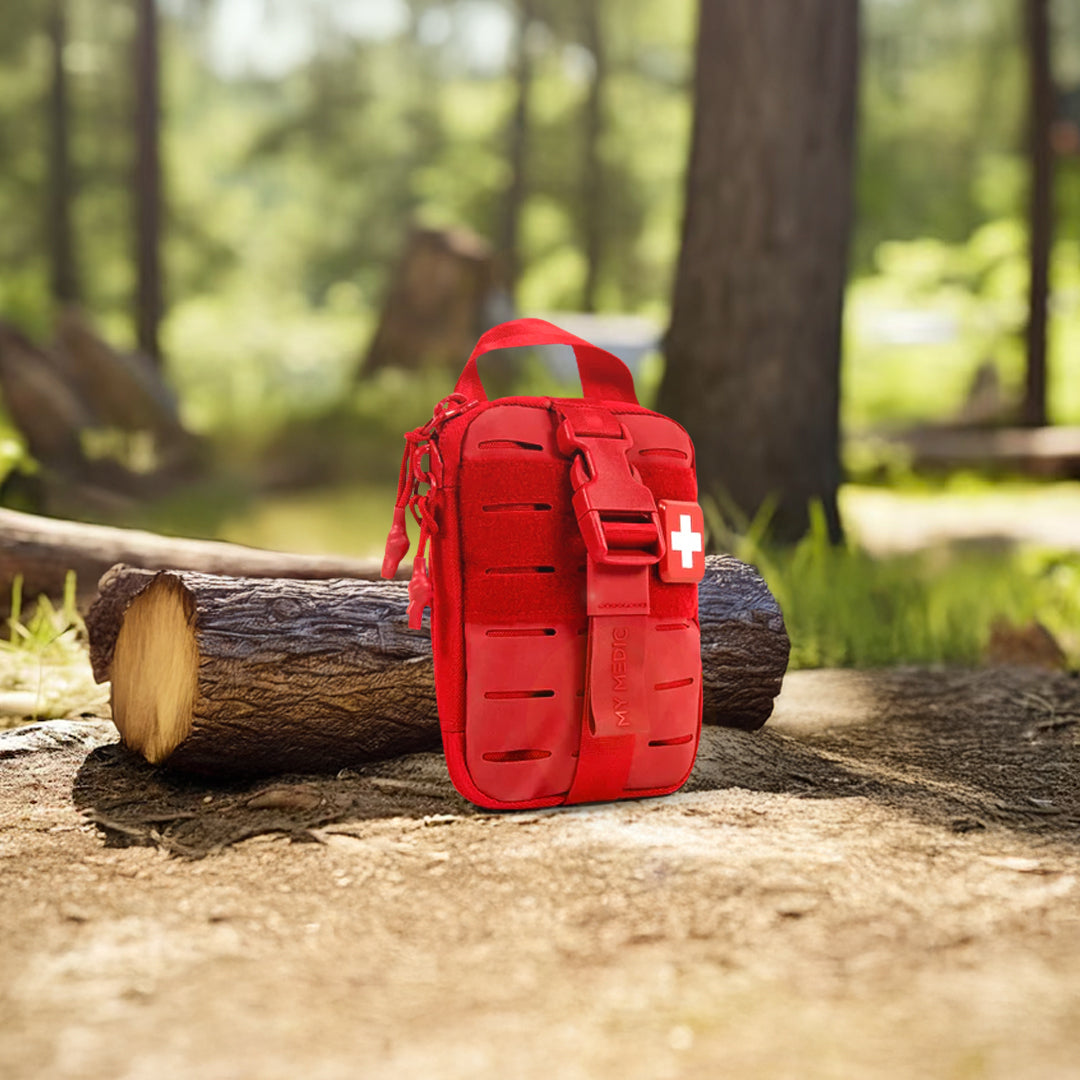
A tornado shelter kit should hold water, shelf-stable snacks, a NOAA weather radio, flashlights and headlamps, a first aid kit, a whistle, sturdy shoes, helmets, work gloves, dust masks, a charged power bank, medications, and copies of key documents. Most tornado sheltering lasts minutes to about two hours, but debris can trap a family far longer, so stock enough water and food for 72 hours and keep it in the shelter year-round.
A tornado gives you less warning than almost any other disaster. When a warning is issued, you often have only minutes to get everyone into the safe room, which means there is no time to gather supplies on the way. Whatever is going to be in the shelter with you has to already be there, stored and ready, every day of storm season.
That changes how a tornado kit is built. It lives permanently in a small space, it has to cover a short stay well and a long stay adequately, and it has to be useful in the dark, in dust, and possibly under debris. This is what to stock, why, and how to fit it into a room that may hold only a few square feet per person.
What Should Be Stocked in a Tornado Shelter?
A tornado shelter should be stocked with supplies in nine categories: Water, food, light, information, first aid, protection, signaling and escape, power, and personal essentials. The table below lists each one, with the reason it belongs in the shelter rather than somewhere else in the house.
|
Category |
What to stock |
Why it belongs in the shelter |
|---|---|---|
|
Water |
One gallon per person per day for 72 hours, in sealed containers |
Debris can block the exit, and water lines may be broken when you get out |
|
Food |
High-calorie, no-cook snacks and bars for 72 hours |
No preparation needed in a cramped, dark space |
|
Light |
A headlamp per person, a battery lantern, and spare batteries |
Power fails instantly, and hands-free light matters when moving debris |
|
Information |
A NOAA hand-crank and solar weather radio with SAME alerts |
Tornado warnings can come in waves, and you need to know when it is safe |
|
First aid |
A full first aid kit with trauma basics such as a tourniquet and pressure dressings |
Flying debris causes cuts and bleeding, and help may be delayed |
|
Protection |
Helmets for each person, sturdy closed-toe shoes, work gloves, and N95 dust masks |
Head injuries are a leading tornado danger, and the ground outside is covered in glass, nails, and dust |
|
Signaling and escape |
A loud whistle or air horn, a small pry bar, and a written list of emergency contacts |
If debris traps you, rescuers need to hear and locate you |
|
Power |
A fully charged power bank and charging cables |
A phone is your link to family and responders after the storm |
|
Personal essentials |
A medication supply, spare glasses, copies of IDs and insurance documents, some cash, and pet supplies |
You may not be able to re-enter the house for hours or days |
Most of this comes from a few places: A ready-made survival kit covers the basics, First Aid supplies the trauma items, Emergency Radios covers the NOAA radio, and Power & Light supplies the headlamps, lanterns, and power banks. Store water in sealed containers from water storage and filtration, and add calorie-dense bars from Food Rations.
How Long Might I Be in a Tornado Shelter?
Most people are in a tornado shelter for a few minutes to about two hours. FEMA’s safe room guidance uses a planning duration of roughly two hours for tornadoes, compared with 24 hours for hurricanes, because a tornado itself passes quickly. On active storm days, though, several warnings can follow one another, and families end up sheltering much longer, sometimes on and off through an entire evening.
The longer scenario is the one the kit is really built for. If the house collapses or debris piles against the shelter door, you may be trapped until rescuers or neighbors clear a way out, which can take hours or longer after a large tornado. That is why the kit holds 72 hours of water and food even though most sheltering is brief. For a family of four, 72 hours at one gallon per person per day comes to 12 gallons of water. It takes up space, but it is the difference between an uncomfortable wait and a dangerous one.
Stay in the shelter until the warning for your area has expired or officials give an all-clear on the radio, not when the wind sounds quieter. A lull can be the gap between storms, and a second tornado is common on outbreak days.
Fitting a Tornado Kit Into a Small Safe Room
Tornado safe rooms are small by design. FEMA guidance for tornado safe rooms allows roughly 3 to 5 square feet per person, which leaves very little room for supplies once everyone is inside. The kit has to be compact and stored off the floor.
Wall shelving or hooks keep supplies from taking up standing room. A single waterproof, labeled bin holds the first aid kit, documents, batteries, and personal items, while water stacks in a corner or under a bench. Hang headlamps and helmets by the door so everyone can grab one as they enter. If your shelter is an interior closet or bathroom rather than a dedicated safe room, keep the kit in a bin just outside the door, or in the room itself if space allows, so it moves in with you in one motion.
The 60-Second Grab List When a Tornado Warning Is Issued
Because the kit already lives in the shelter, the only things you should carry in are the ones that cannot be stored there. Keep this list short, because every extra item costs seconds: Shoes on your feet, your phone, any medication you take daily that is not already stocked, and your pets. Leave everything else.
Practice the move once each spring with the whole household, including children, so everyone knows where the shelter is, who carries the pets, and where the headlamps hang. A drill feels unnecessary right up until the night it saves you thirty seconds.
Keeping a Tornado Shelter Kit Ready Through Storm Season
A shelter kit that sits untouched for a year fails quietly. Check it at the start of each spring storm season, and again in late fall if your area sees a second tornado season. Replace water and snacks on their expiration dates, swap in fresh batteries, recharge the power bank, test the radio and confirm its SAME county code, and update medications and documents as they change. Inspect the shelter itself too, making sure the door opens freely and nothing has been stored in front of it.
This is the quiet work of tornado preparedness: A short checklist done every season, so the room is ready before anything goes wrong.
The Tornado Shelter Mistakes That Put Families at Risk
Most tornado shelter failures have nothing to do with the structure. They come from how the room is stocked and used, and the same few patterns show up after almost every outbreak.
The most common is a shelter used as a storage room, with boxes and holiday decorations filling the space people need. The second is a kit with no light, or with flashlights whose batteries died over the winter, leaving a family in total darkness. The third is leaving the shelter too early, during the calm between storms. The fourth is the most dangerous: Running a generator or any fuel-burning heater inside or near an enclosed shelter, which fills the small space with carbon monoxide within minutes. Battery lighting and a power bank are the only safe power sources in a sealed room. Finally, many families forget a way to signal, and a whistle is the cheapest item in the kit and one of the most important if you are trapped.
FAQ
What Should Be Stocked in a Tornado Shelter?
A tornado shelter should be stocked with water and no-cook food for 72 hours, a NOAA weather radio, a headlamp per person and a battery lantern, a first aid kit with trauma supplies, helmets, sturdy shoes, work gloves, N95 dust masks, a whistle or air horn, a small pry bar, a charged power bank, a medication supply, spare glasses, copies of important documents, cash, and pet supplies. Store it in the shelter year-round, since there is usually no time to gather supplies once a warning is issued.
How Long Might I Be in a Tornado Shelter?
Most tornado sheltering lasts a few minutes to about two hours, and FEMA’s safe room guidance uses a planning duration of roughly two hours for tornadoes. On active storm days, repeated warnings can keep families sheltering much longer, and if debris traps you, you may be there for hours or more until rescuers reach you. That is why a tornado shelter kit should hold 72 hours of water and food even though most stays are short.
How much water should I keep in a tornado safe room for a family of four?
Keep one gallon per person per day for 72 hours, which is 12 gallons for a family of four. Most sheltering is brief, but the 72-hour supply covers the scenario where debris blocks the exit or water lines are broken when you get out. Use sealed containers, store them off the floor if space is tight, and replace them on their expiration dates.
Should I keep helmets in my tornado shelter?
Yes. Head injuries from flying and falling debris are a leading cause of tornado deaths and serious injuries, and a bike, sports, or construction helmet adds real protection. Keep one per person, including children, hanging by the shelter door so each person can put one on as they enter.
Can I run a generator inside a storm shelter?
No. Running a generator, a fuel-burning heater, or any combustion device inside or near an enclosed shelter can fill the small space with carbon monoxide in minutes, which can be fatal. Use only battery-powered lights, radios, and power banks inside a tornado shelter, and run any generator outdoors and well away from openings after the storm has passed.