A flood preparedness checklist covers three phases. Before: Know your flood zone, buy flood insurance at least 30 days ahead, store one gallon of water per person per day for at least 72 hours, and seal documents in a waterproof bag. During: Move to higher ground and never walk or drive through moving water. After: Wait for an all-clear, discard food that touched floodwater, and dry the house within 24 to 48 hours.
Flooding is the most common and most costly natural disaster in the United States, and it does not stay inside the high-risk zones on federal maps: A large share of flood insurance claims come from outside them. FEMA’s FloodSmart program estimates that just one inch of water in an average home can cause about $25,000 in damage, and standard homeowners and renters policies do not cover it. A flood also leaves less room to improvise than a winter storm or a long outage. Once water is in the street, the window to move valuables, fill water containers, or leave has usually closed.
That is why this flood preparedness checklist is organized by time rather than by room. The work before a flood is mostly paperwork, supplies, and a few changes to the house. The work during a flood is a short list of decisions you make in advance, so you are not making them in the dark with water at the door. The work after a flood is about health as much as property: Contaminated water, spoiled food, and mold cause problems long after the water drains away. Think of it as the plan your family can follow without having to ask you what comes next.
What Should Be on a Flood Preparedness Checklist?
A flood preparedness checklist should cover supplies, documents, the house, and the plan, and it should be finished before a Flood Watch is issued. The supply side looks like any 72-hour kit: One gallon of water per person per day (12 gallons for a family of four for three days), food that needs no cooking, medications, a NOAA weather radio, and reliable light. What sets a flood kit apart is the extra layer: Waterproof storage for documents, a way to slow water at the doorways, and boots and gloves for cleanup.
Here is the full checklist, grouped by when each item needs to be done.
|
When |
Item |
Why it matters |
|---|---|---|
|
Months ahead |
Flood insurance through the NFIP or a private insurer |
Homeowners and renters policies exclude flood damage, and NFIP coverage generally starts only after a 30-day waiting period. |
|
Months ahead |
Look up your address on FEMA’s Flood Map Service Center |
It shows your mapped risk, though plenty of flooded homes sit outside the high-risk zones. |
|
Months ahead |
Photo or video inventory of every room |
It speeds up an insurance claim once the furniture is already out on the curb. |
|
Weeks ahead |
Raise the furnace, water heater, and electrical panel if they sit in a flood-prone basement |
It keeps the most expensive systems in the house above the likely waterline. |
|
Weeks ahead |
Battery backup for the sump pump |
A sump pump tends to fail at the exact moment the power does. |
|
Weeks ahead |
IDs, insurance policy, deeds, and prescription list sealed in a waterproof dry bag |
Your paperwork survives the water and leaves the house with you. |
|
Weeks ahead |
Water: One gallon per person per day for at least 72 hours |
Floodwater can contaminate the public supply and private wells. |
|
Weeks ahead |
A NOAA weather radio with alerts, such as the Kaito KA500 |
Warnings still reach you when power and cell service are out. |
|
Weeks ahead |
Headlamp, spare batteries, first aid kit, rubber boots, and work gloves |
Hands-free light for a dark house, and protection for the cleanup. |
|
Weeks ahead |
Sandbags or sandless flood barriers for doors and the garage |
They slow shallow water at the openings where it gets in first. |
|
When a watch is issued |
Fuel the car, charge phones and power banks, move valuables upstairs |
Every task is easier while the street is still dry. |
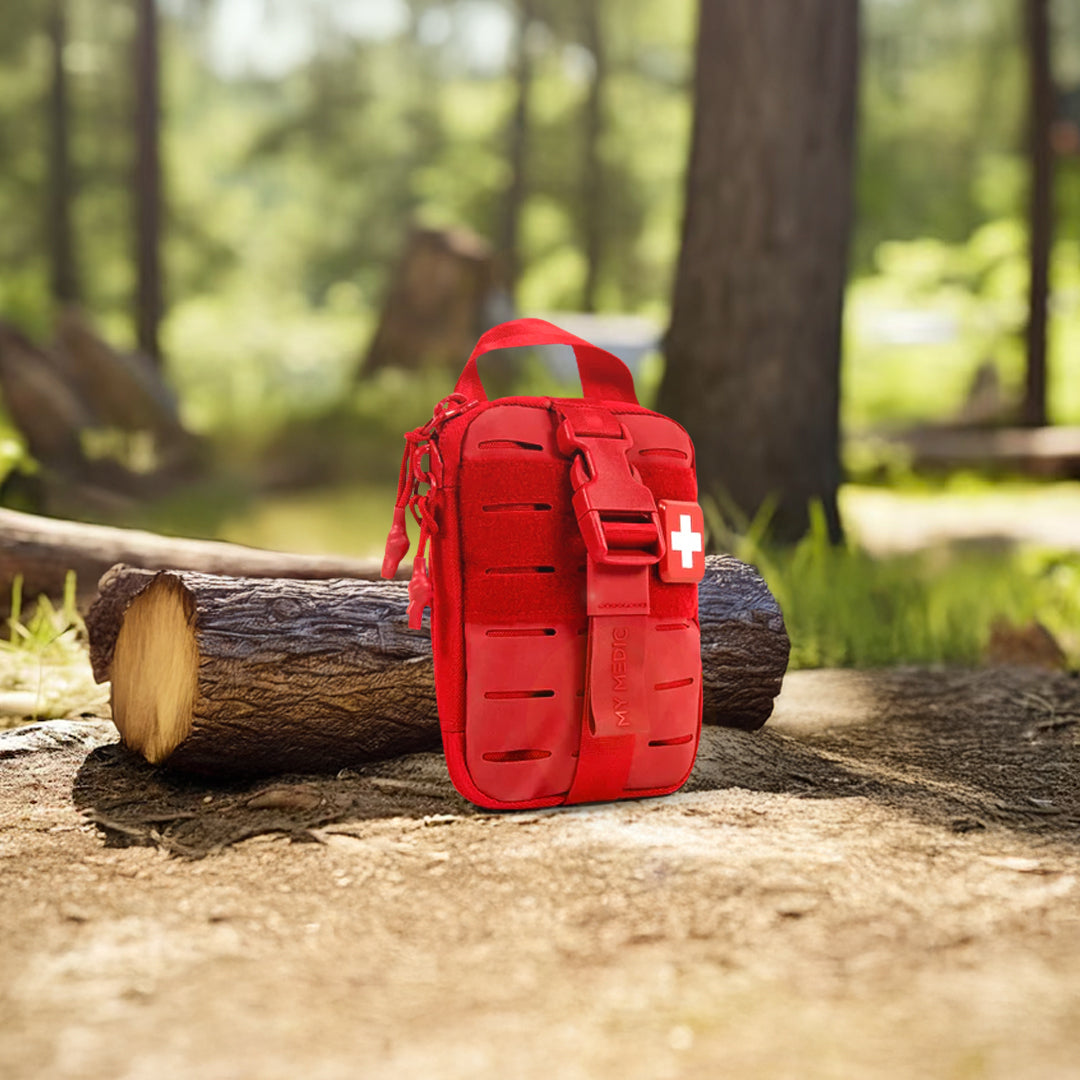
For the light, a waterproof headlamp beats a flashlight when both hands are busy carrying things upstairs. The Fenix HM23 V2.0 ($36.95) is rated IP68 and runs on a single AA. If you are starting from scratch, a ready-made go-bag from Survival Kits covers the 72-hour basics, and the flood-specific pieces fit around it.
Flood Watch vs. Flood Warning: What Each Alert Tells You to Do
The National Weather Service uses four main flood alerts, and each one calls for a different response. Here is what they mean in practice.
|
Alert |
What it means |
What to do |
|---|---|---|
|
Flood Advisory |
Flooding is expected but should not be serious enough for a warning |
Avoid low spots and flooded roads, and keep an eye on updates |
|
Flood Watch |
Conditions are favorable for flooding, but it is neither certain nor imminent |
Finish the checklist, move valuables up, fuel the car, and confirm your route out |
|
Flood Warning |
Flooding is imminent or already happening |
Move to higher ground, and evacuate if officials tell you to |
|
Flash Flood Warning |
A flash flood is imminent or occurring |
Get to higher ground right away; do not wait to see water |
Flood and flash flood warnings are broadcast over NOAA Weather Radio, so a radio with an alert function will wake you for a warning at night, while advisories generally do not set it off. On the West Coast, where atmospheric rivers drive much of the flooding, the same alerts apply, and our guide to preparing for an atmospheric river or flood in California covers the regional details.
How to Protect Your Home in the Days Before Floodwater Arrives
Most of the damage a flood does to a house happens at and below the first floor, so the protective work starts there. Clear gutters, downspouts, and the storm drain in front of the house so rain has somewhere to go. Test the sump pump by pouring a bucket of water into the pit. Learn where the main electrical breaker and the gas shutoff are, and make sure every adult in the house knows too. Then move documents, electronics, and anything irreplaceable to an upper floor or a high shelf.
For doorways and garage openings, barriers buy time against shallow water. Traditional sandbags work, but filling them takes sand, shovels, and hours you may not have when a warning arrives. StormBag sandless flood barriers ship at about 1 pound each and expand to roughly 33 pounds in under three minutes when soaked, forming a barrier about 6 inches thick; a 10-pack runs $99.99. The limit applies to every barrier: Sandbags and their sandless cousins slow and redirect shallow water, but they will not hold back a river, and they are no reason to stay when officials tell you to leave.
Insurance is the item people put off longest, and it is the one that cannot be rushed. National Flood Insurance Program policies generally have a 30-day waiting period, so a policy bought when a storm is already in the forecast will usually not cover it. Treat that as general information rather than insurance advice, and confirm the details with your agent. For a broader walkthrough of judging your risk and building a family plan, see our guide on how to protect your home and family against flooding.
What to Do When the Water Starts Rising at Home
When flooding starts, your job is to get your family above the water and out of its path, not to save the house. Evacuate as soon as local officials tell you to, and leave early enough to use your planned route before roads close. If you are trapped at home, move to the highest floor. Do not climb into a closed attic, where rising water can trap you; go onto the roof only if you have to, and signal for help from there.
Stay away from electrical equipment if you are wet or standing in water. If you can reach the main breaker without stepping into water, switch off the power before water reaches the outlets; if you cannot, leave it alone and call the utility. Keep the radio on, keep phones topped up from a power bank from Power & Light, and send one message to an out-of-area relative so the family knows where you are.
Why You Should Never Walk or Drive Through Floodwater
Most flood deaths are vehicle-related, according to the National Weather Service, and nearly all of them start with someone underestimating moving water. The agency’s numbers are blunt: Six inches of fast-moving water can knock over an adult, 12 inches can carry away most cars, and 2 feet can carry away SUVs and trucks. Floodwater also hides what is under it, from washed-out pavement to open manholes.
The rule is the NWS slogan: “Turn Around Don’t Drown.” Never drive around barricades, never cross a flooded road because the car ahead made it, and stay off bridges over fast-moving water. If your car is caught in rapidly moving water, stay inside; if water starts rising inside the car, get out onto the roof. A window breaker and seat belt cutter within reach of the driver’s seat is cheap insurance for the moment a door will not open against the water.
What Should You Do After a Flood?
After a flood, go home only when authorities say it is safe, then put health ahead of property: Treat all floodwater as contaminated, keep the power off until an electrician checks anything that got wet, throw out food that touched the water, and start drying the house within 24 to 48 hours. Photograph every room and every damaged item before you move or discard anything, because your insurer will want to see it.
Do not drink tap water until local officials say the supply is safe. Until then, use your stored water, or bring clear water to a rolling boil for one minute (three minutes above 6,500 feet). A private well that flooded needs to be tested and disinfected before you use it again. Portable filters from water storage and filtration are useful for stored or questionable tap water, but do not rely on one to make floodwater itself drinkable, since it can carry sewage and chemicals.
The CDC’s food rule is simple: Throw out any food that may have touched floodwater, including anything in cardboard, screw-cap, or snap-lid containers and all home-canned goods, along with wooden cutting boards, baby bottle nipples, and pacifiers. Undamaged commercial cans can be saved if you remove the labels, wash the cans, dip them in 1 cup of bleach mixed into 5 gallons of water, and relabel them with a marker. When in doubt, throw it out, and restock from Food Rations.
If you run a generator during cleanup, keep it outdoors and at least 20 feet from windows, doors, and attached garages. Portable generators are the leading cause of carbon monoxide deaths after storms, and a house full of exhausted people running fans and pumps is exactly where it happens.
How to Clean a Flooded Home Before Mold Takes Hold
Mold is the slow damage a flood leaves behind, and the CDC’s guidance is to clean up and dry the house within 24 to 48 hours if you possibly can. Open doors and windows, run fans that blow air out of the house, and remove anything porous that cannot be cleaned and dried in that window, such as carpet, padding, mattresses, upholstered furniture, and soaked drywall. When in doubt, take it out.
Use the right bleach mix for the job, because the CDC gives two different ratios. For hard surfaces that touched floodwater but show no mold, such as floors, counters, and appliance exteriors, wash with soap and clean water first, then disinfect with 1 cup of bleach in 5 gallons of water and let it air dry. For mold already growing on hard surfaces, use no more than 1 cup of bleach per gallon of water and scrub with a stiff brush. Never mix bleach with ammonia or other cleaners, which releases toxic fumes, and wear rubber boots, waterproof gloves, goggles, and an N95 respirator while you work.
Decide early which jobs belong to a professional: Large areas of mold, a flooded electrical panel, and gas appliances that sat in water all call for someone licensed. Keep a First Aid kit close during cleanup, too. Cleanup brings cuts and scrapes, and any wound that touches floodwater needs to be washed with soap and clean water right away.
The Flood Preparedness Mistakes That Put Families in Danger
Flood injuries and losses tend to follow the same pattern, and very few of them come down to missing gear. The first is driving into a flooded road because it looks shallow, the decision behind most flood deaths. The second is shopping for flood insurance once a storm is already in the forecast, then learning about the 30-day waiting period. The third is keeping documents and medications in a basement or a ground-floor drawer, where they are the first things the water reaches. The fourth is going back inside too early and wading through water that may be electrified or carrying sewage. The last is waiting a week to start drying the house, by which point mold is already in the walls.
None of this takes heroics. It takes a little quiet work done in calm weather: The policy in place, the documents sealed in a dry bag, the radio on the shelf, and a plan everyone in the house already knows. Finish it before anything goes wrong, and when the water rises, your family will already know where to go.
FAQ
What Should Be on a Flood Preparedness Checklist?
A flood preparedness checklist should include flood insurance bought at least 30 days ahead, a check of your flood zone, a photo inventory of your home, one gallon of water per person per day for at least 72 hours, food that needs no cooking, medications, a NOAA weather radio, a headlamp, and a first aid kit. Add flood-specific items: Documents in a waterproof bag, barriers for doorways, a sump pump battery backup, and rubber boots and gloves for cleanup.
What Should You Do After a Flood?
Return only when authorities say it is safe. Treat floodwater as contaminated, keep the power off until an electrician checks anything that got wet, and photograph all damage before removing it. Throw out food that touched floodwater, drink only stored or boiled water until officials clear the supply, and dry the house within 24 to 48 hours, removing porous items that cannot be cleaned and dried in that time.
How much moving water does it take to sweep away a car?
According to the National Weather Service, 12 inches of rushing water can carry away most cars, and 2 feet can carry away SUVs and trucks. Just 6 inches of fast-moving water can knock over an adult. Never drive or walk into floodwater; turn around and find another route.
How long does it take for flood insurance to start?
National Flood Insurance Program policies generally have a 30-day waiting period before coverage begins, so buying a policy when a storm is already forecast usually comes too late. Standard homeowners and renters policies do not cover flood damage. This is general information, not insurance advice; confirm the terms of your own policy with your agent.
How much bleach do you use to clean up after a flood?
The CDC recommends 1 cup of bleach in 5 gallons of water to disinfect hard surfaces that touched floodwater but show no mold, after washing them with soap and clean water. For mold growing on hard surfaces, use no more than 1 cup of bleach per gallon of water. Never mix bleach with ammonia or other cleaners.
How quickly do you need to dry a house after a flood?
The CDC advises cleaning up and drying a flooded home within 24 to 48 hours to prevent mold growth. Open doors and windows, run fans that blow air outside, and remove carpet, padding, mattresses, and other porous items that cannot be cleaned and dried within that window.