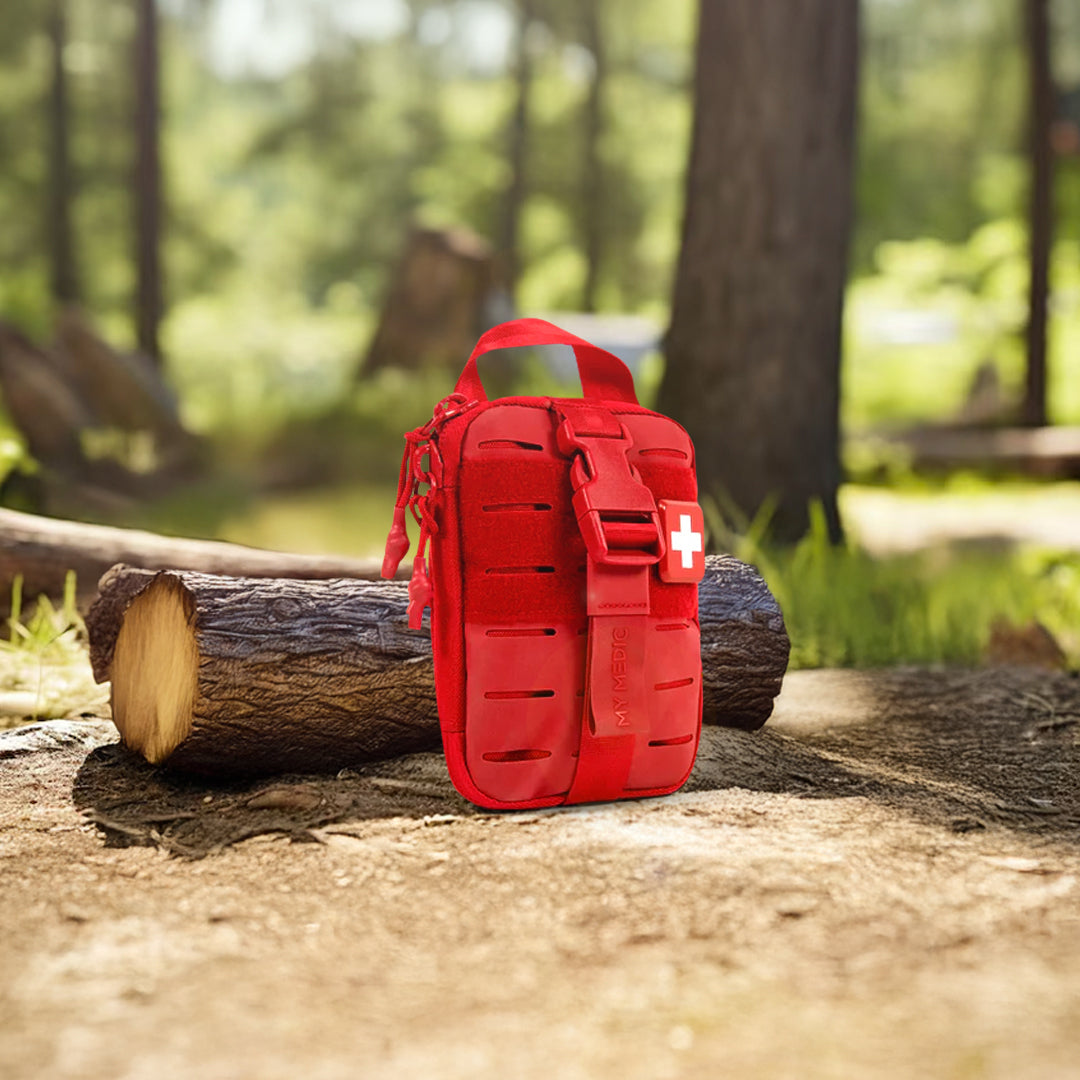
Most "wildfire kit" lists are just a generic go bag with the word "wildfire" stuck on top. They miss the two things that make a fire different from every other disaster: the smoke, and the speed.
A wildfire doesn't give you the days of warning a hurricane does. The wind shifts, an ember jumps the ridge, and an evacuation order can go from "watch" to "leave now" in minutes. And long before the flames reach you, the smoke is already in your house, in your lungs, and across the only road out. So the bag I pack for fire season is built around those two facts. Here's what's in it, and why each piece earns its place.
Why a wildfire bag is different
Two things change the plan.
Smoke arrives first, and travels far. You can be a hundred miles from a fire and still have air that's dangerous to breathe, especially for kids, older adults, and anyone with asthma or a heart condition. Wildfire smoke is full of fine particles that get deep into the lungs. That means a wildfire kit has to protect your air, not just feed and water you. Most generic go bags skip this completely.
The window to leave is short. Fires move with the wind. The official guidance in fire country is to be ready to go at a moment's notice during red-flag conditions. That rules out any plan that depends on packing when the order comes. The bag has to be done, in the car or by the door, before the smoke even shows up.
Plan for those two things and the rest of the list falls into place.

What's in my wildfire evacuation bag
This is the 72-hour core, with the fire-specific pieces called out. Start from a solid base bag, then add the smoke and document layers that fire demands.
The base: a packed go bag. I start with the Safe Trail Go Bag because the 72-hour core is already handled: water and a filter, no-cook food, first aid, light, warmth, and tools. In a fire, "already packed and light enough to carry" matters more than in almost any other scenario, because you may be loading a car with kids and pets while ash falls.
Smoke protection, the piece fire adds. This is what a generic bag misses. Pack proper N95 or better respirators for every person, not paper dust masks, since cloth and surgical masks don't stop fine smoke particles. And think past the bag to the house: if you shelter in place while smoke passes, or you return after, a real HEPA air purifier is what makes indoor air breathable again. We treat smoke as its own threat, which is why we stock that category at all. If you want the deeper guide on which unit handles wildfire smoke, our best air purifier for wildfire smoke breakdown covers exactly that.
Information when the cell network drops. Fires take out cell towers and power. A Kaito weather radio that runs on hand crank or battery keeps you on NOAA alerts and evacuation updates when your phone is dead or the network is gone. In a fast-moving fire, knowing which roads are open is not optional.
No-cook food and water. You won't be cooking in an evacuation. A Heaven's Harvest 72-hour food supply gives you days of meals that need only water, which pairs with the filter in the base bag. Fire evacuations can mean long hours in a car or a shelter, and food your family will actually eat keeps everyone steadier.
The fire-specific document layer. Fire destroys homes completely, so your documents matter more here than in a flood or outage. Pack copies of IDs, insurance policies, home inventory photos, and deeds in a waterproof bag, plus some cash. After a fire, the insurance claim is the long road home, and the proof has to leave with you.

The order to grab things in, when you have minutes
When the order comes, you won't have time to think. Decide the order now.
-
People and pets first. Everyone in the car. Count heads.
-
The go bags. One per person, already packed. This is why they live by the door.
-
The "five-minute" list. A short, written list taped inside a cabinet: medications, the document folder, phone chargers, and the one or two irreplaceable things. Written down, because your memory fails under stress.
-
Masks on, windows up, recirculate. Respirators on before you drive into smoke, car vents set to recirculate.
-
Go. Don't wait to see it. The people who get trapped are usually the ones who waited for proof.
A bag by the door turns that from a panic into a routine you can run in the dark with a toddler on your hip.

Stay-or-go, and the smoke that lingers
Not every fire means evacuation. Sometimes you're far enough out that the danger is days of heavy smoke, not flames. That's its own plan: close up the house, run a HEPA air purifier in the room where everyone sleeps, and keep the respirators handy for any trip outside. Smoke can sit over a region for a week after the fire is contained, so the air problem outlasts the fire problem. The same kit covers both jobs, which is the point of building it around smoke and speed instead of flames alone.
The bottom line
A wildfire evacuation bag isn't a regular go bag with a new label. It's a bag built for the two things fire does that nothing else does: it poisons your air before it ever reaches you, and it gives you minutes, not days. Protect the air, pack for speed, keep your documents ready to leave, and decide the grab-order now while you're calm.
That's the quiet work fire season asks for. Do it once, in June, and you spend the rest of the season ready instead of scrambling. Start with the Safe Trail Go Bag as your base, add the smoke and document layers above, and browse the disaster preparedness collection for the rest.
FAQ
How do I prepare for a wildfire evacuation? Prepare for a wildfire evacuation by building around two things fire does that other disasters don't: it fills the air with dangerous smoke before flames arrive, and it can force you to leave in minutes. Keep a packed go bag per person by the door or in the car so you never pack under pressure. Add N95 or better respirators for everyone, copies of your IDs, insurance and home-inventory photos in a waterproof bag, medications, and a hand-crank weather radio for alerts when the cell network drops. Decide your grab-order in advance (people and pets, then go bags, then a short written five-minute list), put masks on before driving into smoke, and leave early rather than waiting to see the fire.
What should be in a wildfire evacuation bag? A wildfire evacuation bag should hold the 72-hour core plus fire-specific items. The core: water and a filter, no-cook food, first aid, light, warmth, and basic tools. The fire-specific additions that generic bags miss: N95 or better respirators for every person to filter smoke, copies of IDs, insurance and home-inventory photos with some cash, medications, and a hand-crank or battery weather radio for evacuation updates. Keep it light enough to carry while you load kids and pets, and store it where you can grab it in seconds.
What is the best go bag for wildfire evacuation in California? The best go bag for a California wildfire is one that's already packed, light enough to carry fast, and built to handle smoke as well as the 72-hour basics. Start with a solid pre-built base like the Entropy Safe Trail Go Bag, which covers water and filtration, no-cook food, first aid, light, and tools, then add the fire layer: respirators for smoke, a waterproof document folder, medications, and a hand-crank weather radio. For the days of heavy smoke that follow most fires, pair the bag with a HEPA air purifier at home. The right bag protects your air and your speed, not just your stomach.