Hurricane Preparedness Checklist 2026: What to Have Ready Before Peak Season
The question we hear most when a storm is sitting out in the Atlantic is some version of "what do I buy, and do I have time?" It's the right question, asked a few days too late.
Here's the honest framing. A hurricane is not a surprise. Unlike an earthquake or a house fire, it gives you days of warning. The National Hurricane Center names the system, draws the cone, and counts down to landfall on the news. So the work that keeps your family safe isn't the work you do when the storm has a name. It's the work you did weeks before, in order, while the shelves were still full and the prices were still normal.
Atlantic hurricane season opened on June 1 and runs through November, with the real teeth showing up from August through October. That gives you a window right now. This is the checklist we'd run to use it, written as a merchant who stocks this gear and sells it to families on the Gulf and the Atlantic coast every year. Not a fear post. A list you can actually work through.
What a hurricane actually takes out of your house
Before the checklist, understand what you're planning against. A hurricane attacks three things, and almost everything on the list below maps back to one of them.
Grid power, for days. This is the big one. After a major storm, utilities can take anywhere from a couple of days to two weeks to restore power, and rural lines go to the back of the queue. No power means no fridge, no AC in August heat, no way to charge a phone or run a CPAP.
Clean water. Storm surge and flooding contaminate municipal supply, and "boil water" notices follow most landfalls. If the power is also out, you can't boil anything easily. Stored water is the answer, and it's the cheapest item on this whole list.
Road access. Flooded and debris-blocked roads mean you can't drive to a store, and a store with no power can't sell you much anyway. For a few days, the supplies in your house are the only supplies you have. That's the planning reality the checklist is built around.
The checklist, in the order we'd actually do it
Order matters more than the items. People buy the exciting thing first (a generator) and skip the boring thing that saves lives (water). Run it in this sequence.
1. Water, first. Store one gallon per person per day, and plan for at least three days, ideally a week. For a family of four over a week, that's 28 gallons. Tap-filled food-grade containers are fine; rotate them every six months. Add a filter as backup for when stored water runs low.
2. Food that needs no power, second. Shelf-stable food you have already eaten once, so you know your family will eat it under stress. Three to seven days minimum, no cooking required or cooking that needs only boiling water. More on the specifics below.
3. Power, third. A way to keep the fridge, phones, lights, and any medical device running through a multi-day outage. This is where a whole-home battery earns its place, covered below.
4. Comms and light, fourth. A hand-crank or battery weather radio for NOAA alerts when the cell network is down, plus headlamps and lanterns. Phones die; a radio that needs no grid does not.
5. The go-bag, last. One bag per person, packed and by the door, in case the order changes from "shelter in place" to "leave now." This is the evacuation version of the plan, and it's the piece most people never build.
Power for a multi-day outage
When the grid is down for days, a few power banks won't cut it. You're trying to keep a refrigerator cold, phones and a weather radio charged, a CPAP running overnight, and a couple of lights on. That's a job for a whole-home battery, not a phone charger.
The unit we point hurricane-coast customers to is the EcoFlow DELTA Pro 3. It's our whole-home flagship, and on a real panel it can carry the loads that matter through an outage: the fridge, lights, phones, a CPAP, and a window AC unit in short stretches. The point isn't the spec sheet. The point is that the things keeping your family fed, charged, and able to breathe at night keep running while the street stays dark.
If you want the full breakdown of what it runs, for how long, and how it compares to the alternatives before you spend flagship money, our EcoFlow DELTA Pro 3 review goes deep on exactly that (publishing this week; Jeremy, add the link once the review is live). A storm outage is also the one time a quieter, fuel-free battery beats a gas generator you have to refuel in the wind and rain.
Food and water that need no power
The trap with hurricane food is buying a pile of cans your family won't actually eat, then discovering that during the storm. The fix is simple: store food you've already served once, and store enough water to prepare it.
For the no-cook and boil-only layer, complete freeze-dried meals are the easy answer because they rehydrate with hot water in about 10 to 15 minutes and store for years. The Heaven's Harvest combo is the one we stock for this because it's built around meals, not single ingredients, and it's food people will eat without a fight. If you want the deeper comparison on which food brand fits which job, our Heaven's Harvest vs Augason Farms breakdown lays out the trade between ready meals and bulk staples.
Pair the food with the stored water from step one, and you've covered the two failure modes that hit hardest after landfall: an empty fridge and a tap you can't trust.
If you have to leave
Sometimes the plan changes. The county issues a mandatory evacuation, or the water comes up faster than forecast, and "shelter in place" becomes "get in the car." If you haven't built a grab-and-go bag before that moment, you're packing in a panic.
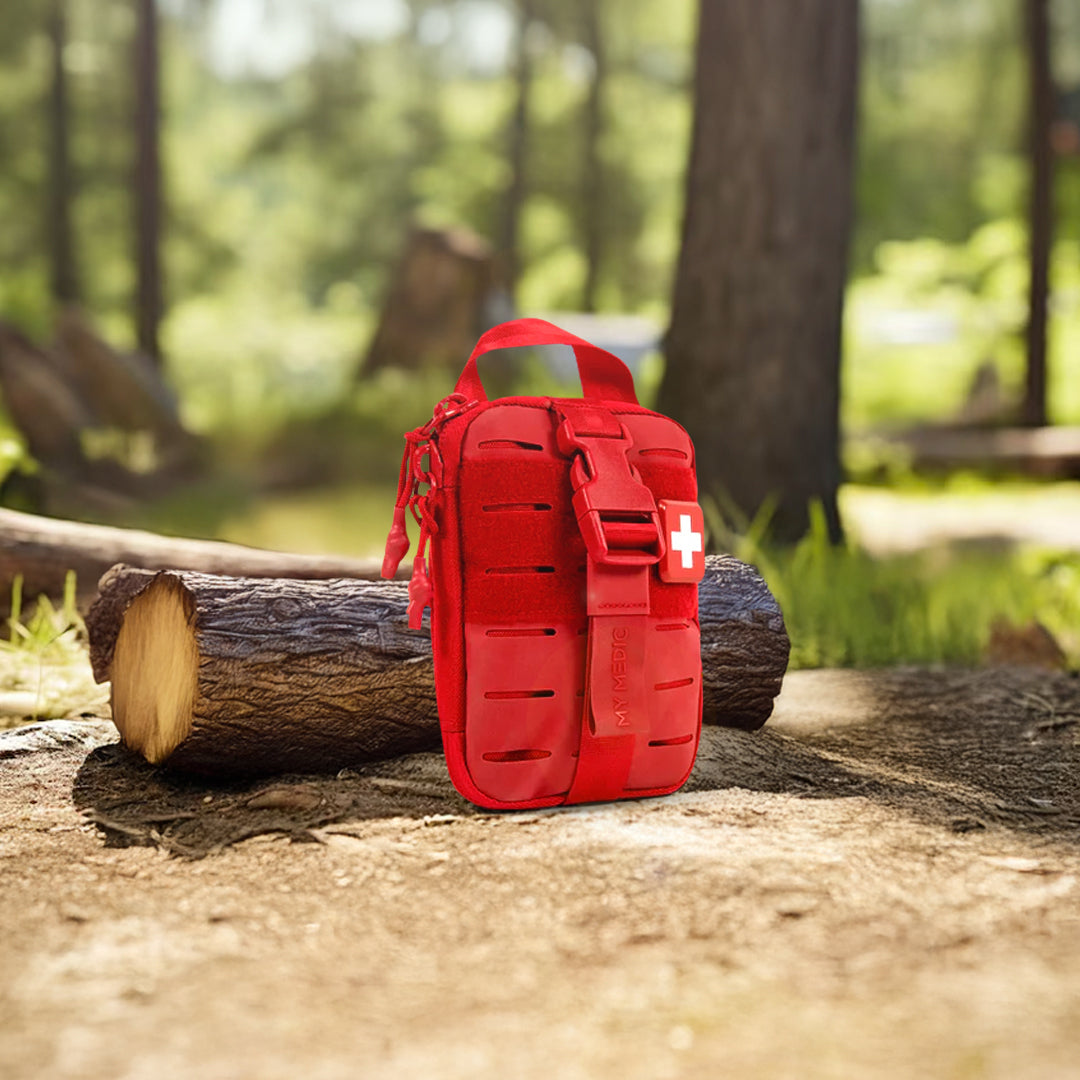
A go-bag is one bag per person with 72 hours of the essentials: water and a filter, no-cook food, a first-aid kit, a flashlight, a weather radio, copies of key documents, medications, and cash. The Safe House Survival Kit is the grab-and-go starting point we recommend, because it covers the 72-hour core in one box you can add your family's specifics to. If you'd rather build it yourself, our guide on what goes in a real 72-hour kit walks the full list. (Jeremy, verify this URL before publish.)
The honest limit
A checklist is only real if you've done it before the storm is named. The water has to be in the containers. The battery has to be charged. The bag has to be packed and where everyone can find it in the dark. A pile of unopened boxes in the garage is not a hurricane plan; it's a shopping list you ran out of time to finish.
That's the quiet work, and the good news is you have time to do it right now, before peak season, while there's nothing in the cone. Start with one step this week. Fill the water containers. Next week, the food. The week after, the power. By August, you're the household that's ready instead of the one in line at the store.
Start with the disaster preparedness collection for the full lineup, or work straight down the five steps above.
FAQ
How do I prepare for a hurricane at home? Prepare in priority order before the storm forms: store one gallon of water per person per day for at least three to seven days, stock three to seven days of shelf-stable food that needs no cooking, set up a way to keep your fridge and devices running through a multi-day power outage, add a battery or hand-crank weather radio and lights, and pack one go-bag per person by the door in case you have to evacuate. The key is doing this weeks ahead, not when the storm is named, because stores sell out and roads flood once a hurricane is close.
What is the best hurricane preparedness kit to buy? The best hurricane kit covers four jobs: water, no-cook food, backup power, and a grab-and-go bag. For the go-bag core, a pre-built 72-hour family kit like the Safe House Survival Kit gives you the essentials in one box to build on. Add stored water and a filter, a few days of complete freeze-dried meals such as a Heaven's Harvest combo, and a whole-home battery like the EcoFlow DELTA Pro 3 to keep the fridge and medical devices running when the grid goes down for days. No single product is a complete kit on its own; a hurricane plan is layered by job.
What should I have in my home before hurricane season starts? Before peak season, have these in place: at least three to seven days of water (one gallon per person per day), three to seven days of shelf-stable food you've eaten before, a charged whole-home power station or battery for multi-day outages, a NOAA weather radio that runs without the grid, flashlights and lanterns, a stocked first-aid kit, and a packed go-bag for each family member. Have it ready by early summer, since the Atlantic season opens June 1 and peaks August through October.