How to Protect Your Home During Riots and Civil Unrest: A Comprehensive Preparedness Guide
When civil unrest erupts in your city, you may have only hours—or even minutes—to secure your home and protect your family. Recent events across the United States have shown that riots and civil disturbances can escalate rapidly, leaving unprepared homeowners vulnerable to property damage, looting, and worse.
Most homeowners never consider how to protect their property during civil unrest until it's too late. Standard home security systems aren't designed for mob scenarios, and law enforcement resources become stretched thin during widespread disturbances. Without a comprehensive protection plan, your home becomes a target of opportunity.
This guide provides a complete, actionable framework for protecting your home during riots and civil unrest—from pre-incident preparation through post-event recovery. You'll learn layered security strategies used by security professionals, budget-friendly DIY solutions, and family safety protocols that work in real-world scenarios.
We'll cover immediate physical security measures, situational awareness and early warning systems, family communication plans, legal considerations, and recovery procedures. Whether you have days to prepare or need to act within hours, you'll have a clear action plan.
Understanding Civil Unrest Threats: Risk Assessment for Your Home
Types of Civil Unrest and Associated Risks
Not all civil disturbances pose the same threat to residential areas. Understanding the distinctions between peaceful protests, riots, and widespread civil disturbances helps you calibrate your response appropriately.
Peaceful protests typically follow designated routes, maintain organization, and disperse without incident. These pose minimal direct threat to residential areas, though nearby streets may experience temporary disruption.
Riots represent a significant escalation, characterized by property destruction, looting, and violence. Many incidents escalate from peaceful daytime protests to destructive nighttime riots within 6-8 hours. Common targets during riots include commercial districts first, particularly retail stores, followed by government buildings and symbols of authority.
Residential spillover occurs when rioters disperse from primary target areas or when unrest becomes geographically widespread. Homes near commercial districts face elevated risk, particularly properties on evacuation routes or major thoroughfares where crowds disperse.
Timeline patterns matter. Most civil unrest follows predictable escalation: peaceful gathering (hours 1-4), increased tension and confrontation (hours 4-8), peak destruction after dark (hours 8-16), and gradual dispersal by dawn. Understanding this timeline gives you critical windows for preparation.
Assessing Your Home's Vulnerability
Your home's specific risk level depends on multiple factors. Use this assessment framework to determine your priority security needs:
Geographic Risk Factors:
- Within 5 blocks of commercial districts: High risk
- On major thoroughfares or protest routes: Elevated risk
- Near government buildings or police stations: Elevated risk
- In purely residential suburbs away from commercial areas: Lower risk
Property Characteristics:
- Ground-floor windows and doors: Primary vulnerability
- Attached garages with internal access: Secondary vulnerability
- Corner lots with multiple street exposures: Increased visibility risk
- Privacy fencing and setback from street: Risk reduction
- Visible security measures (cameras, lighting): Deterrence factor
Neighborhood Dynamics:
- Active neighborhood watch programs: Significant protection
- Strong community cohesion: Force multiplier for security
- Mix of occupied and vacant properties: Vulnerability indicator
- Economic diversity: Potential risk factor during class-based unrest
Score your property: Assign 1 point for each high-risk factor, subtract 1 for each protective factor. Scores of 3+ warrant immediate comprehensive security measures. Scores of 1-2 suggest targeted improvements. Scores of 0 or below indicate lower priority but don't eliminate the need for basic preparedness.
Physical Security Hardening: Protecting Entry Points and Perimeter
Home security during riots requires a layered defense approach. Think of your property as having concentric security rings: perimeter, exterior shell, and interior safe spaces.
Securing Windows and Glass Surfaces
Windows represent your primary vulnerability—they're easily broken and provide quick entry points. Multiple protection options exist, each with distinct advantages.
Security Film Applications:
3M Safety & Security Film (4-mil to 15-mil thickness) bonds glass fragments together even when shattered, preventing easy entry. A quality 8-mil film costs $8-12 per square foot installed, or $4-6 for DIY application. Professional installation takes 2-3 days; DIY requires careful surface preparation but can be completed in a weekend.
Benefits: Transparent, permanent solution that also provides UV protection and energy efficiency. Effective against thrown objects and opportunistic break-ins.
Limitations: Won't stop determined intruders with tools, requires 28 days to fully cure, significant upfront investment ($800-2,000 for average home).
Temporary Boarding Methods:
3/4-inch exterior-grade plywood provides effective barrier protection at minimal cost. Pre-measure and cut boards for each window during calm periods. Mark each board clearly with its designated window location.
Installation technique matters: Use 3-inch deck screws driven into window frames every 8-12 inches around the perimeter. Interior mounting provides better protection than exterior boarding and prevents removal from outside. Store pre-cut boards in garage or basement with mounting hardware in labeled bags.
Budget: $15-25 per window for materials, 15-30 minutes installation per window. Total cost for average home: $200-400.
Prioritization Strategy:
Secure ground-floor windows first—these face the majority of forced entry attempts. Second-floor windows warrant attention only if accessible via nearby trees, balconies, or roof access. Basement windows require metal grating or glass block for long-term protection.
Reinforcing Doors and Entry Points
Doors represent the second most common entry point. Standard residential doors can be kicked in with 1-2 solid strikes—reinforcement changes this dramatically.
Essential Door Hardening:
Heavy-duty deadbolts: Grade 1 deadbolts (ANSI/BHMA certification) provide serious resistance. Look for 1-inch throw length minimum and hardened steel construction. Cost: $50-150 per door.
Strike plate reinforcement: Replace standard strike plates with 3-inch heavy-duty versions secured with 3-inch screws into wall studs, not just door frames. This single upgrade prevents most kick-in attempts. Cost: $15-30.
Door jamb reinforcement: Door jamb armor kits spread entry force across the entire frame rather than concentrating it at the lock point. Installation requires basic tools and takes 30-45 minutes per door. Cost: $70-150.
Security bars and door jammers: Buddy Bar or Master Lock Security Bar provide additional bracing from inside, ideal for temporary reinforcement during active threats. Cost: $30-60.
Garage Door Vulnerabilities:
Attached garages with interior access represent a critical security gap most homeowners overlook. Reinforce the door between garage and house with same measures as exterior doors. Consider a garage door lock bar or side-mounted lock to prevent lifting. Disconnect automatic garage door opener during unrest to prevent signal exploitation.
Creating Safe Rooms:
Designate an interior room with no windows (typically a bathroom or walk-in closet) as your family safe room. Reinforce the door, install communication equipment, and stock emergency supplies. This provides a final defensive position if exterior security fails.
Perimeter Security and Deterrence
Your property boundary represents the first line of defense. Visible security measures deter opportunistic threats while buying critical response time.
Strategic Lighting:
Motion-activated floodlights eliminate dark approaches to your home. Position lights to cover all entry points and blind potential intruders moving toward the house. Solar-powered options eliminate electrical vulnerabilities. Budget: $40-120 per light fixture, 8-12 fixtures for comprehensive coverage.
During active unrest, consider switching to constant illumination rather than motion activation—continuous lighting suggests occupancy and vigilance.
Visual Deterrents:
Security signage, visible cameras (even non-functional ones), and "Beware of Dog" signs create psychological barriers. Rioters typically seek easy targets; visible security suggests resistance and risk.
Removing Projectile Sources:
Secure or store loose items from your yard: patio furniture, gardening tools, decorative rocks, and firewood. These become weapons during civil unrest. Twenty minutes of yard cleanup eliminates most improvised projectile opportunities.
Perimeter Barriers:
Existing fencing provides some deterrent value, but gaps and gates require attention. Temporary barricading of driveway gates with vehicles or heavy objects prevents vehicle access to your property. For long-term security, 6-foot privacy fencing creates both physical and visual barriers.
Surveillance, Monitoring, and Early Warning Systems
Situational awareness determines whether you have hours or minutes to prepare. Effective monitoring systems provide critical early warning while documenting incidents for later insurance and legal purposes.
Home Surveillance Technology
Modern security cameras serve dual purposes during civil unrest: real-time monitoring and evidence documentation.
Security Camera System Comparison:
| System | Type | Key Features | Power Backup | Cost Range |
|---|---|---|---|---|
| Ring Spotlight Cam | Wireless | 1080p, motion detection, two-way audio, cloud storage | Battery/solar option | $200-250 per camera |
| Arlo Pro 4 | Wireless | 2K HDR, color night vision, 160° view, local/cloud storage | Battery/solar | $180-200 per camera |
| Reolink 4K PoE | Wired | 4K resolution, 24/7 recording, NVR storage, no subscription | Requires UPS backup | $400-600 (4-camera system) |
| Lorex 4K Nocturnal | Wired | Extreme night vision, 4K, NVR storage, no fees | Requires generator/UPS | $500-700 (4-camera system) |
| SimpliSafe Camera | Wireless | 1080p, integrates with alarm system, professional monitoring option | Battery | $100 per camera + $15-25/month |
Critical Features for Civil Unrest Scenarios:
- Cloud storage with off-site backup (protects evidence if system is destroyed)
- Night vision capability (most unrest occurs after dark)
- Wide-angle coverage (captures crowd movements)
- Power independence (battery or solar backup)
- Mobile alerts (enables remote monitoring if evacuated)
Strategic Camera Placement:
Position cameras to cover: front door/porch, driveway/street approach, backyard access points, and garage. Angle cameras downward to capture faces rather than tops of heads. Mount high enough (8-10 feet) to prevent easy tampering but low enough for facial recognition.
One camera positioned to monitor your street provides early warning of approaching disturbances—often your most valuable surveillance asset during civil unrest.
Community Intelligence and Communication Networks
Your security network extends beyond your property line. Community coordination multiplies effectiveness while sharing the burden of vigilance.
Real-Time Monitoring Tools:
Police scanner apps: Broadcastify and Scanner Radio provide live feeds of law enforcement communications. Monitor your local channels during unrest for dispatch information about incident locations and spread patterns. Free with ads, or $5-10/month for premium.
Emergency alert systems: Download your local emergency management app and enable all alert types. FEMA app provides national-level alerts. Citizen app (available in major cities) crowdsources incident reports with real-time mapping.
Social media monitoring: Twitter/X hashtags for your city plus keywords like "protest," "march route," and "police activity" provide early indication of gathering locations and movement patterns. Create saved searches or lists for quick monitoring.
Neighborhood Coordination:
Establish a neighborhood communication network using group text, WhatsApp, or Nextdoor before civil unrest occurs. Share observations, coordinate watch schedules, and provide mutual aid during incidents.
Designate contact persons for each block and establish check-in protocols. A coordinated neighborhood where residents communicate and watch out for each other presents a much harder target than isolated households.
Family Safety Planning and Emergency Protocols
Physical security measures protect property, but family safety planning protects lives. Your household needs clear protocols that everyone understands and can execute under stress.
Creating a Family Emergency Action Plan
Confusion during emergencies causes critical mistakes. Pre-established protocols eliminate decision paralysis when seconds count.
Decision Triggers:
Establish clear criteria that trigger specific actions. Write these down and ensure all family members understand them.
Green Alert - Civil unrest reported in city but not immediate area:
- Monitor news and scanner apps hourly
- Review family plan and gathering locations
- Charge all devices and fill vehicle fuel tanks
- Stage go-bags near exits
Yellow Alert - Unrest within 1 mile or approaching neighborhood:
- Implement physical security measures (board windows if planned)
- Move vehicles into garage, secure all outdoor items
- Gather family members home, recall anyone in affected areas
- Maintain constant monitoring of situation
- Prepare for shelter-in-place or evacuation
Red Alert - Active unrest on your street or immediate block:
- Lock and secure all entry points
- Family members move to the designated safe room
- Call 911 if safe to do so (understand response may be delayed)
- Document incidents via camera/phone from concealed positions
- Prepare to evacuate via the predetermined route if fire or serious threat develops
Communication Protocols:
When family members are separated during unrest onset, communication becomes critical. Designate an out-of-area contact (relative or friend in another state) as your family hub—local networks often become overwhelmed but long-distance calling remains functional.
Establish check-in times: Every family member contacts the hub at predetermined intervals with location and status. This prevents dangerous travel attempts to reunite based on incorrect assumptions about others' locations.
Safe Room Procedures:
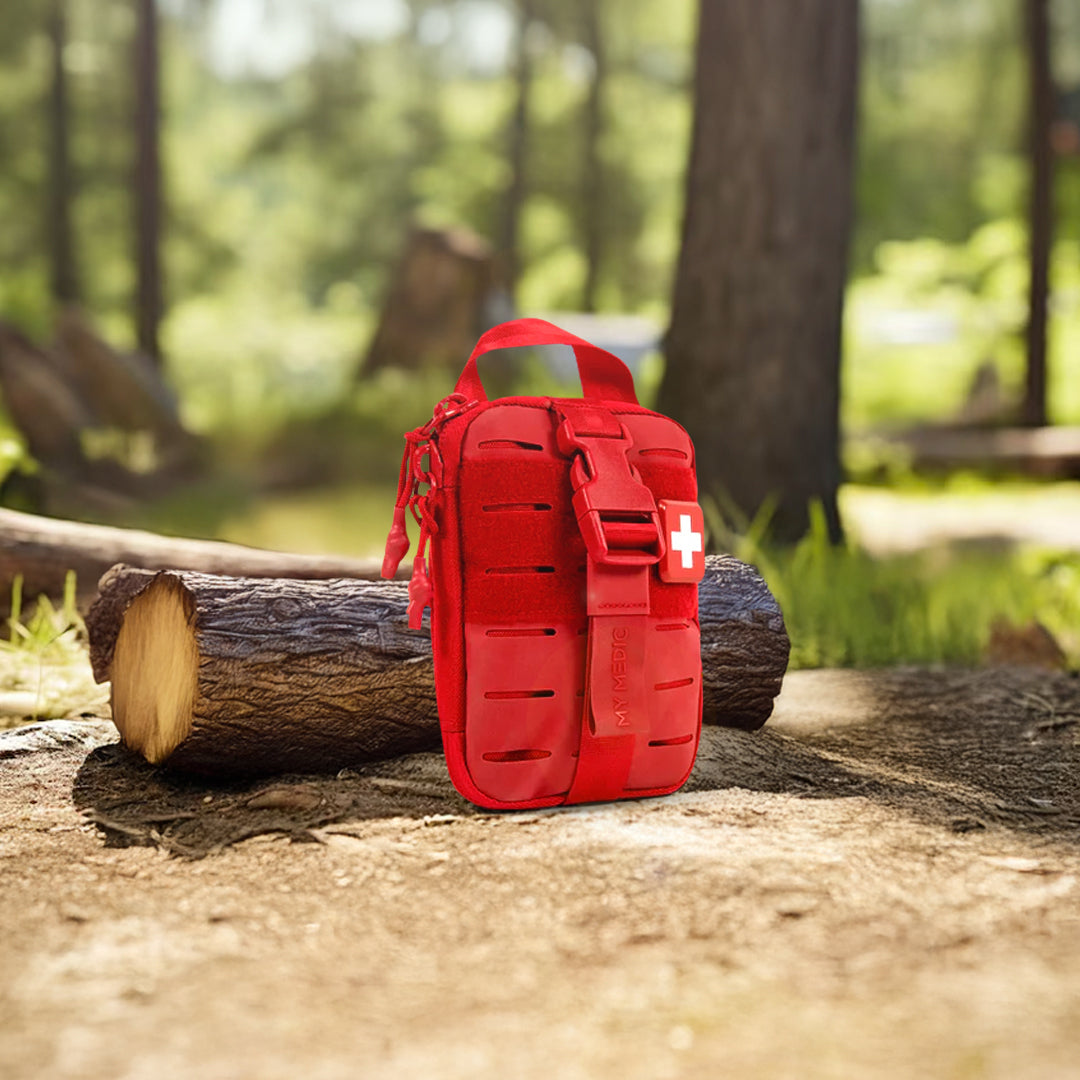
Your designated safe room should contain: charged phone and backup battery, first aid kit, flashlight, bottled water, and tools for emergency exit if necessary. Practice moving to the safe room with a timer—you want this to take less than 60 seconds from any location in your home.
Children need age-appropriate explanations and role-specific tasks during safe room drills. Even young children can be responsible for gathering a pet or bringing a specific bag, giving them purpose rather than panic.
Essential Supplies and Shelter-in-Place Preparation
Civil unrest may trap you at home for 24-72 hours with limited access to resources. Your emergency supply kit requires specific modifications for civil unrest scenarios.
72-Hour Civil Unrest Supply Checklist:
Water & Food (Priority 1):
- 1 gallon per person per day (3-day minimum)
- Ready-to-eat meals requiring no cooking (power may be out)
- Manual can opener and eating utensils
- Baby formula and pet food if applicable
Medical Supplies (Priority 1):
- First aid kit with trauma supplies (heavy bandaging, tourniquets)
- Prescription medications (7-day supply)
- Eye wash and saline solution (tear gas exposure)
- Respiratory protection: N95 masks or better
- Burn treatment supplies
Power & Communications (Priority 2):
- Battery-powered or hand-crank radio (NOAA weather radio)
- Fully charged power banks for phones (20,000+ mAh capacity)
- Extra batteries for flashlights and radios
- Portable generator with fuel (stored safely) or solar charging system
Fire Safety (Priority 1):
- ABC-rated fire extinguishers (one per floor minimum)
- Fire blankets for smothering small fires
- Multiple exit routes identified and practiced
- Rope ladders for second-floor emergency egress
Sanitation (Priority 3):
- Toilet paper, wet wipes, garbage bags
- Bleach for water purification and sanitation
- Hand sanitizer and soap
Documents & Cash (Priority 2):
- Copies of important documents in waterproof container
- $200-500 cash in small bills (ATMs may be down)
- Insurance policies and contact information
- Property photos and video for potential claims
Store these supplies in your safe room or in quickly accessible locations. Update and rotate food, water, and medications every 6 months. For additional guidance on comprehensive emergency preparedness, review our detailed emergency preparedness planning guide.
Personal Safety Protocols During Active Unrest
Once civil unrest reaches your immediate area, specific behaviors enhance safety and documentation capabilities.
Staying Safe Inside:
- Remain away from exterior walls and windows (projectiles can penetrate)
- Close interior doors to create barriers between rooms
- Turn off lights in unoccupied rooms to limit silhouette visibility
- If tear gas enters your home, seal affected rooms with wet towels under doors, move to opposite side of house, ventilate once safe
Responding to Forced Entry Attempts:
Your response depends on your situation assessment. If you hear breaking glass or door damage:
- Gather family to safe room immediately
- Call 911 and stay on line (recording of incident critical for later)
- Make loud verbal warnings that police are on the way and home is occupied
- Do not investigate or confront unless absolutely necessary for immediate safety
The goal is deterrence and documentation, not confrontation. Most opportunistic looters seek empty properties and will move to easier targets when met with clear resistance and police notification.
Documentation Protocol:
If safe to do so, photograph or video incidents from concealed positions away from windows. Capture:
- Property damage with timestamps
- Perpetrators (faces if possible)
- Vehicles (plates, make, model)
- Sequence of events
Store recordings in cloud storage immediately—devices may be stolen or damaged. This documentation becomes crucial for insurance claims and law enforcement investigations.
Communication with Emergency Services:
During widespread civil unrest, 911 response times extend significantly—sometimes hours rather than minutes. When calling:
- Clearly state your address and nature of the threat
- Mention family members including children (may prioritize response)
- Stay on the line if possible
- Understand response may be delayed; this doesn't mean abandonment
Legal Considerations and Responsible Home Defense
Understanding your legal rights and responsibilities prevents serious legal consequences after successfully defending your property.
Understanding Castle Doctrine and Self-Defense Laws
State laws governing home defense vary significantly. Most states recognize some form of "Castle Doctrine"—the principle that your home is your castle and you have special legal protections when defending it.
Key Legal Concepts:
Castle Doctrine allows you to defend your home without duty to retreat. However, the level of force must generally be proportional to the threat. Most states permit deadly force only when you reasonably believe it's necessary to prevent:
- Death or serious bodily injury
- Sexual assault
- Kidnapping
- Arson (in some states)
Property defense alone rarely justifies deadly force in most jurisdictions. Shooting someone for breaking a window or stealing property may result in criminal charges even in strong Castle Doctrine states.
Stand Your Ground laws (in 28+ states) extend Castle Doctrine protections to any location you have legal right to be, not just your home. These laws vary significantly by state.
State-Specific Variations:
- Strong Castle Doctrine states (Texas, Florida, Arizona): Broad protections for home defenders, presumption of reasonable fear when someone forcibly enters
- Moderate protection states: Castle Doctrine applies but with more scrutiny of proportional force
- Duty to retreat states (handful including Vermont, Rhode Island): Must attempt retreat if safely possible even in home, though practical application during civil unrest remains largely untested
Consult state-specific resources before civil unrest occurs. Your state attorney general's website often provides plain-language explanations of self-defense laws.
Documentation Requirements:
If forced to use defensive measures:
- Immediately call 911 and clearly state you defended yourself against intruder
- Secure scene but don't disturb evidence
- Provide basic facts to police but request attorney before detailed statements
- Photograph injuries, property damage, and scene
- Identify witnesses who can corroborate threat
Insurance Coverage and Liability Protection
Financial protection requires understanding your insurance coverage before incidents occur.
Homeowner's Insurance Review:
Standard homeowner's policies typically include "riot and civil commotion" coverage, but verify your specific policy. Check:
- Coverage limits for structural damage and contents
- Separate coverage for detached structures (garages, sheds)
- Additional living expenses if home becomes uninhabitable
- Deductible amounts
Schedule high-value items (jewelry, electronics, collections) separately—standard contents coverage may be insufficient. Document everything with photos and video, stored in cloud or off-site location.
Liability Considerations:
You can potentially be sued for injuries sustained by intruders on your property, even during criminal acts. Umbrella liability insurance ($1-2 million coverage for $200-400/year) provides crucial protection against civil lawsuits following defensive actions.
Pre-Incident Documentation:
Create comprehensive property documentation now:
- Walk-through video of every room showing condition and contents
- Photographs of valuables with serial numbers visible
- Receipts and appraisals for high-value items
- Exterior photos showing property condition
Store copies with your insurance agent and in secure cloud storage. Update annually or after major purchases. This documentation dramatically streamlines claims processes and ensures full compensation for losses.
Post-Incident Recovery and Documentation
After civil unrest subsides, systematic recovery processes protect your financial interests and restore security.
Damage Assessment and Evidence Collection
Before cleaning anything, document thoroughly. Insurance adjusters need to verify damage before authorizing repairs.
Systematic Documentation Protocol:
- Exterior assessment: Photograph property from street level and all sides, capturing overall condition before detailed inspection
- Room-by-room interior documentation: Video entire rooms showing damage context, then photograph specific damage from multiple angles
- Close-ups with measurements: Use measuring tape in photos showing damage dimensions
- Serial numbers and identifying marks: Document damaged items' brands, models, serial numbers
- Receipts and proof of ownership: Gather purchase receipts, credit card statements, or warranty documents for damaged items
Timeline Reconstruction:
Create written timeline of events including:
- When you first noticed unrest approaching
- Specific times of property damage
- What defensive measures you implemented when
- Any interactions with law enforcement or emergency services
- Witness names and contact information
This timeline proves invaluable for insurance claims, law enforcement investigations, and potential legal proceedings.
Evidence Preservation:
Don't discard damaged items until insurance adjuster approves. Store damaged goods in secure location (garage or outbuilding) where they won't deteriorate further. If perishables must be discarded, photograph them first and keep receipts showing original purchase dates and costs.
Recovery and Restoration Process
Immediate Security Restoration:
Before cosmetic repairs, restore basic security:
- Board broken windows temporarily (even if filing insurance claim)
- Install temporary door locks if damaged
- Secure property perimeter to prevent additional unauthorized access
- Consider temporary security service if property remains vulnerable
Insurance Claims Process:
- File claim within timeframe specified in policy (typically 48-72 hours)
- Provide comprehensive documentation package
- Cooperate fully with adjuster's inspection
- Get multiple repair estimates if permitted by policy
- Request advance payments for temporary security measures if available
Contractor Selection During High-Demand Periods:
Following widespread civil unrest, qualified contractors become scarce. Vet carefully:
- Verify licenses, insurance, and bonding
- Check references from recent similar projects
- Get detailed written estimates with material specifications
- Establish clear timeline and payment schedule
- Never pay full amount upfront (30% deposit maximum)
Psychological Recovery:
Experiencing civil unrest near your home creates lasting anxiety. Address mental health proactively:
- Consider short-term counseling for family members showing stress symptoms
- Maintain routines that provide stability for children
- Process the experience through discussion with support network
- Channel anxiety into preparedness improvements rather than helplessness
Lessons-Learned Security Improvements:
Use the experience to upgrade security permanently:
- Which measures proved most effective?
- What vulnerabilities did you discover?
- What would you do differently with more preparation time?
Implement enhanced permanent security measures during repairs. The investment provides both practical protection and psychological peace of mind.
Budget-Conscious Security Solutions: Protection at Every Price Point
Effective home protection during civil unrest doesn't require unlimited resources. Strategic investments at any budget level significantly improve your security posture.
Minimal Budget Security ($50-$200)
When funds are tight, prioritize highest-impact measures first.
Essential Hardware Store Security Package ($150-200):
- Heavy-duty deadbolts for front and back doors: $100
- 3-inch strike plate reinforcements: $30
- Door security bar/jammer: $35
- Window security film for ground-floor glass: DIY kit $50 (covers 2-3 windows)
- Motion-sensor LED light bulbs for existing fixtures: $40
Free or Nearly Free Measures:
- Remove projectile sources from yard: $0
- Trim bushes away from windows and doors: $0-20 (pruning shears)
- Establish neighborhood communication network: $0
- Download emergency apps (Citizen, Broadcastify): $0
- Create family emergency plan: $0
- Document property with smartphone: $0
DIY Window Boarding Materials ($80-120):
- 3/4" exterior plywood sheets: $45-55 per sheet (covers 4-6 windows)
- 3" deck screws (2 boxes): $20
- Drill with bits: $40 (if you don't own one)
- Label maker or markers for board identification: $5
This minimal investment addresses your highest vulnerability points—doors and ground-floor windows—while establishing communication and planning frameworks that cost nothing.
Moderate Investment Security ($200-$1,000)
With moderate budget, you can implement comprehensive basic security that covers multiple vulnerability layers.
Recommended $500 Security Package:
- Ring Video Doorbell + Spotlight Cam: $300
- Complete door reinforcement system (2 doors): $150
- Window film DIY kit (ground-floor windows): $200
- 4-pack motion-activated outdoor lights: $120
- Emergency power bank and backup lighting: $80
Alternative $800 Comprehensive Package:
- Reolink 4-camera PoE system with NVR: $400
- Professional door security consultation and installation: $200
- Window film DIY kit (all ground-floor windows): $150
- Portable generator (small unit): $300
- Safe room reinforcement materials: $100
Installation Difficulty & Effectiveness:
| Measure | DIY Difficulty | Installation Time | Effectiveness | ROI Rating |
|---|---|---|---|---|
| Security cameras (wireless) | Easy | 2-3 hours | High | Excellent |
| Door reinforcement kits | Moderate | 1-2 hours | Very High | Outstanding |
| Window security film | Moderate | 4-6 hours | High | Very Good |
| Motion lights | Easy | 1 hour | Moderate | Good |
| Safe room reinforcement | Moderate | 4-8 hours | Very High | Excellent |
Most moderate-budget measures can be DIY-installed with basic tools, saving 30-50% versus professional installation costs.
Comprehensive Security Systems ($1,000+)
Higher budgets enable professional-grade security approaching commercial facility standards.
Premium $2,500 Security Package:
- Professional 8-camera 4K surveillance system with 24/7 recording: $1,200
- Complete home security film installation (all windows): $800
- Professional door reinforcement and high-security locks: $400
- Smart home security integration with automated lighting: $350
- UPS backup power system: $300
- Professional security assessment and consulting: $450
Ultimate $5,000+ Protection:
- Monitored alarm system with professional response: $1,500 + $40/month
- Impact-resistant window upgrades (critical windows): $2,500
- Security shutters (motorized, key windows): $1,500
- Safe room construction/reinforcement: $2,000
- Whole-house generator with auto-transfer switch: $3,500
- Security lighting with backup power: $500
ROI Analysis:
Premium security systems offer multiple return benefits:
- Insurance premium reductions: 5-20% annually (saves $100-500/year)
- Property value increase: 2-5% for homes with comprehensive security
- Immediate deployment capability during future civil unrest events
- Daily peace of mind and general crime deterrence
- Potential tax deductions for home office security (consult tax professional)
A $2,500 security investment can pay for itself through insurance savings and property value increase within 5-7 years, representing sound financial planning beyond emergency preparedness.
Taking Action: Your Next Steps
Protecting your home during riots and civil unrest requires a multi-layered approach combining physical security, situational awareness, family preparedness, and legal knowledge. The strategies outlined in this guide—from reinforcing entry points and installing surveillance systems to creating family emergency plans and understanding your legal rights—significantly reduce your vulnerability and increase your family's safety during civil disturbances.
Remember that preparation is most effective when done before unrest occurs, giving you time to make thoughtful decisions rather than reactive choices under pressure. A well-prepared home with reinforced access points, monitored perimeter, and established family protocols presents a hard target that most opportunistic threats will bypass in favor of easier options.
Begin with these immediate action steps:
- Conduct a home vulnerability assessment using the checklist provided
- Prioritize security improvements based on your specific risk factors and budget
- Download emergency apps and establish family communication protocols
- Document your property's current condition with comprehensive photos and video
- Review your insurance coverage and verify riot/civil commotion protection
- Connect with neighbors to establish community watch networks
Start small if necessary—even minimal budget measures provide meaningful protection. The key is beginning now rather than waiting for the next crisis.
For additional resources on emergency preparedness, explore our guides on creating comprehensive emergency plans, preparing for power outages, and ensuring safe drinking water during extended emergencies.
Your home and family's safety is too important to leave to chance. Take control of your security today—because preparation transforms anxiety into confidence, and planning into protection when it matters most.