
What size solar panel do I need to recharge my power station?
Start with the station’s capacity in watt-hours. Portable panels rarely hit their rated output in the field: Heat, angle, and haze typically cut it to 70 to 80 percent, and most of the U.S. averages four to six peak sun hours a day.
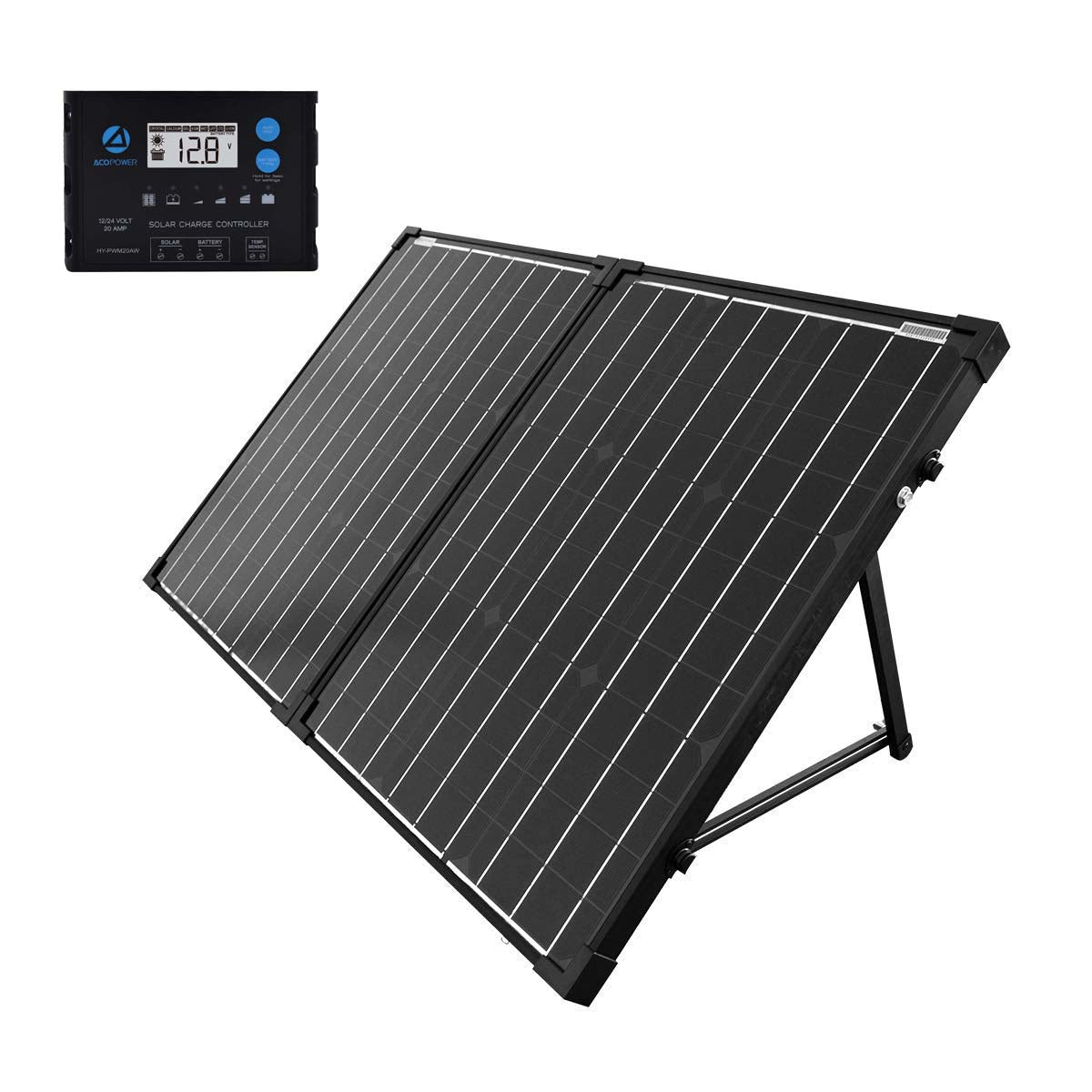
Take the Anker SOLIX C1000 Gen2 at 1,024Wh. One 200W panel at 75 percent over five sun hours puts back about 750Wh, so a full recharge takes close to a day and a half. Two 200W panels refill it in one good day, and its 600W solar input leaves room for a third. As a rule of thumb, divide the station’s watt-hours by three to four for one-day recharging, and never plan around more panel wattage than the station can accept. Matched options are in Anker SOLIX Solar Panels & Portable Power Stations.

Can I use any solar panel with any power station?
Not any, but most combinations work once three things line up:
- Voltage: The panel’s open-circuit voltage, listed as Voc, has to stay inside the station’s solar input range. This is the one that causes damage when it is wrong.
- Wattage: Panel wattage above the station’s limit is generally clipped rather than harmful, so oversizing mostly wastes money.
- Connector: MC4, XT60, Anderson, and DC8020 plugs do not interchange, but adapter cables are cheap and easy to find.
The Anker PS200 panel has a 57.6V open-circuit voltage, inside the C1000 Gen2’s 60V ceiling. Two in series reach 115V, nearly double the limit, while two in parallel keep the voltage the same and add the current. Voc also rises in cold weather, so leave headroom below the maximum. Same-brand panels and the bundles here take the question off the table, as do the panels in EcoFlow DELTA Power Stations & Solar Generators.

Why a 200W Solar Panel Rarely Delivers 200 Watts
Panel ratings are measured in lab conditions: Strong, direct light at a cell temperature of 25°C. Outside, three things eat into that number.
- Heat: Output drops as cells warm, and a dark panel in summer sun runs far hotter than 25°C.
- Angle and shade: A panel lying flat, or with one shaded row of cells, can lose a large share of its output. Prop it facing the sun and re-aim every couple of hours.
- Cloud: Under heavy overcast, expect roughly 10 to 25 percent of rated output.
Bifacial panels like the EcoFlow NextGen 220W also catch light reflected onto the back, which helps over snow, sand, or pale concrete. Our take for an emergency setup: Size for the overcast day, not the number on the box. If you still need the station itself, start with Backup Power Stations & Solar Generators, and for a permanent system with a separate inverter, see Power Inverters for Off-Grid & Emergency Backup Power.
Frequently asked questions
What size solar panel do I need to recharge my power station?
Divide the station’s capacity in watt-hours by three to four to get the panel wattage for a one-day recharge in good sun. That accounts for portable panels delivering around 70 to 80 percent of their rating and most of the U.S. averaging four to six peak sun hours. A 1,024Wh station like the Anker SOLIX C1000 Gen2 needs roughly 250 to 350 watts of panel to refill in a day, so two 200W panels is the practical setup. Never plan around more panel wattage than the station’s maximum solar input.
Can I use any solar panel with any power station?
Not any, but most panels work with most stations once three things match. The panel’s open-circuit voltage (Voc) must stay within the station’s solar input voltage range, which is the one that can cause damage if exceeded. Extra wattage beyond the station’s limit is generally clipped, so it wastes money rather than causing harm. The connector must match or be adapted, since MC4, XT60, Anderson, and DC8020 plugs are not interchangeable. Same-brand panels and pre-matched bundles remove the guesswork entirely.
How long does it take to charge a 1,000Wh power station with solar?
With one 200W panel delivering around 75 percent of its rating, a 1,000Wh station needs about 6.7 hours of strong sun, which in practice usually means a day and a half. With 400W of panels, it needs about 3.3 hours of strong sun, so one good day is enough. Overcast weather can stretch either figure several times over, which is why it is worth sizing above the minimum.
Do portable solar panels work on cloudy days?
Yes, but at a fraction of their rating. Under heavy overcast, expect roughly 10 to 25 percent of rated output, so a 200W panel might deliver 20 to 50 watts. Thin cloud costs much less. For an emergency setup, size your panels for the overcast day rather than the clear one, and consider bifacial panels, which also collect light reflected onto the back.
Can I connect two portable solar panels together?
Yes, in series or in parallel, and the choice matters. Series wiring adds the voltages together, while parallel wiring keeps the voltage the same and adds the current. Two panels with a 57.6V open-circuit voltage reach about 115V in series, which would exceed a station with a 60V input limit, but stay at 57.6V in parallel. Check the station’s maximum input voltage and current before connecting, and leave headroom, because open-circuit voltage rises in cold weather.
HAVE QUESTIONS OR NEED HELP CHOOSING THE RIGHT SURVIVAL GEAR? GET IN TOUCH WITH US TODAY – WE'RE HERE TO HELP!