


What size power inverter do I need for off-grid solar?
Add up the running watts of everything you will use at once, then add 20 to 25 percent headroom. A refrigerator at 150 watts, lights at 60, a CPAP at 60, and device charging at 100 comes to 370 watts, or about 460 with headroom. Then check surge: That same fridge can briefly pull 600 to 900 watts when its compressor starts, which is why an essentials system needs a 1,000 to 2,000 watt pure sine wave inverter, not a 500 watt one.
From there, most systems land in one of three tiers:
- Essentials backup, 1,000 to 3,000 watts on 12V, such as the Victron Phoenix 12/1600 or the Renogy 3000W.
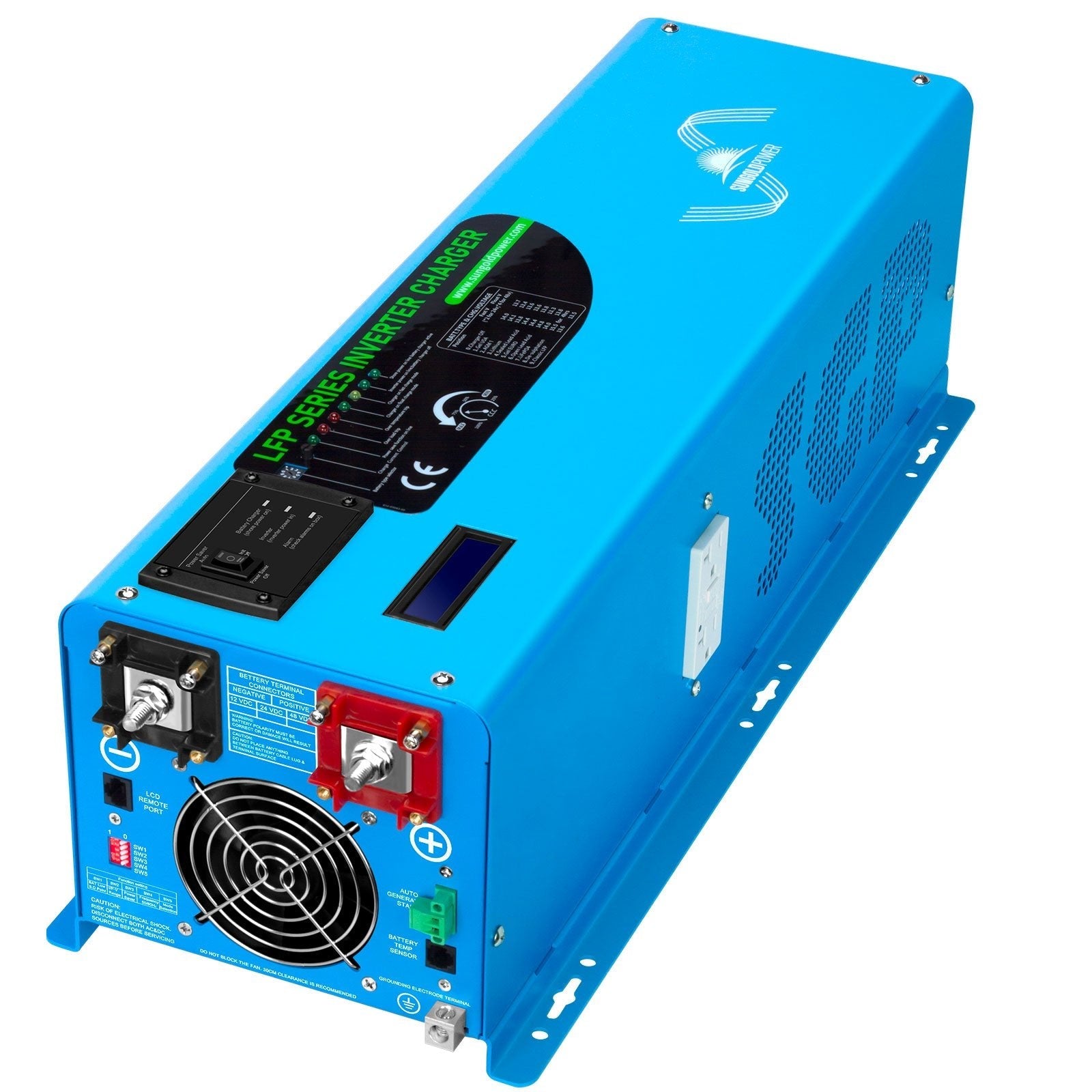
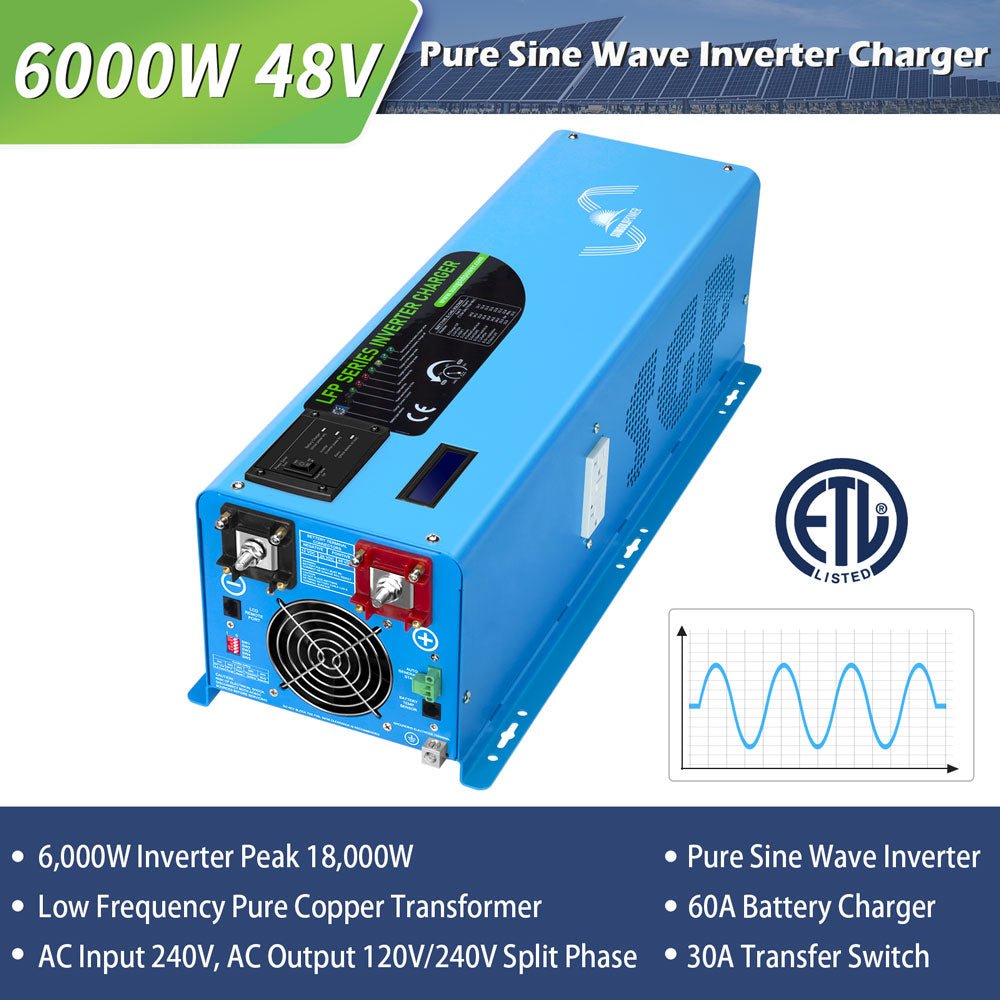
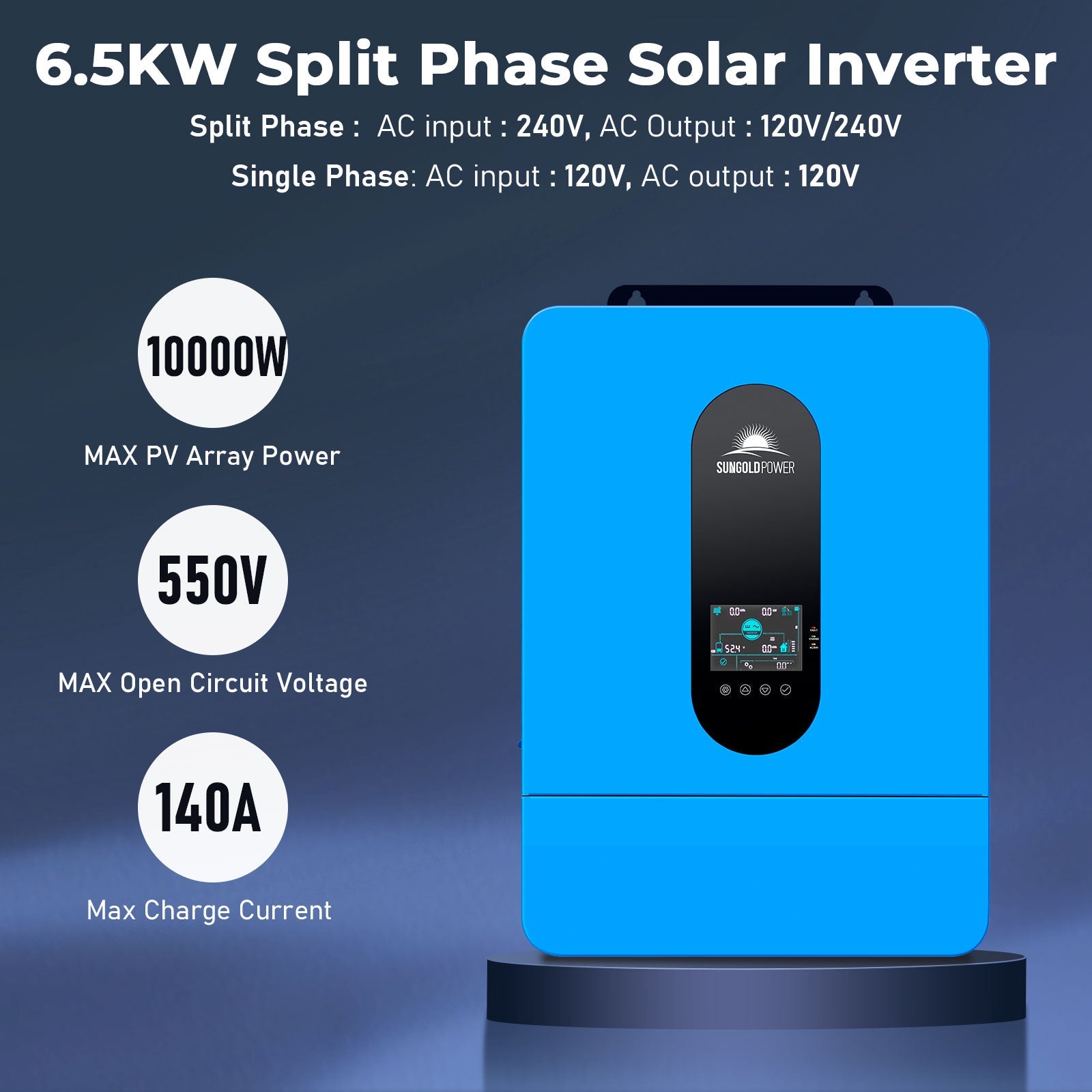
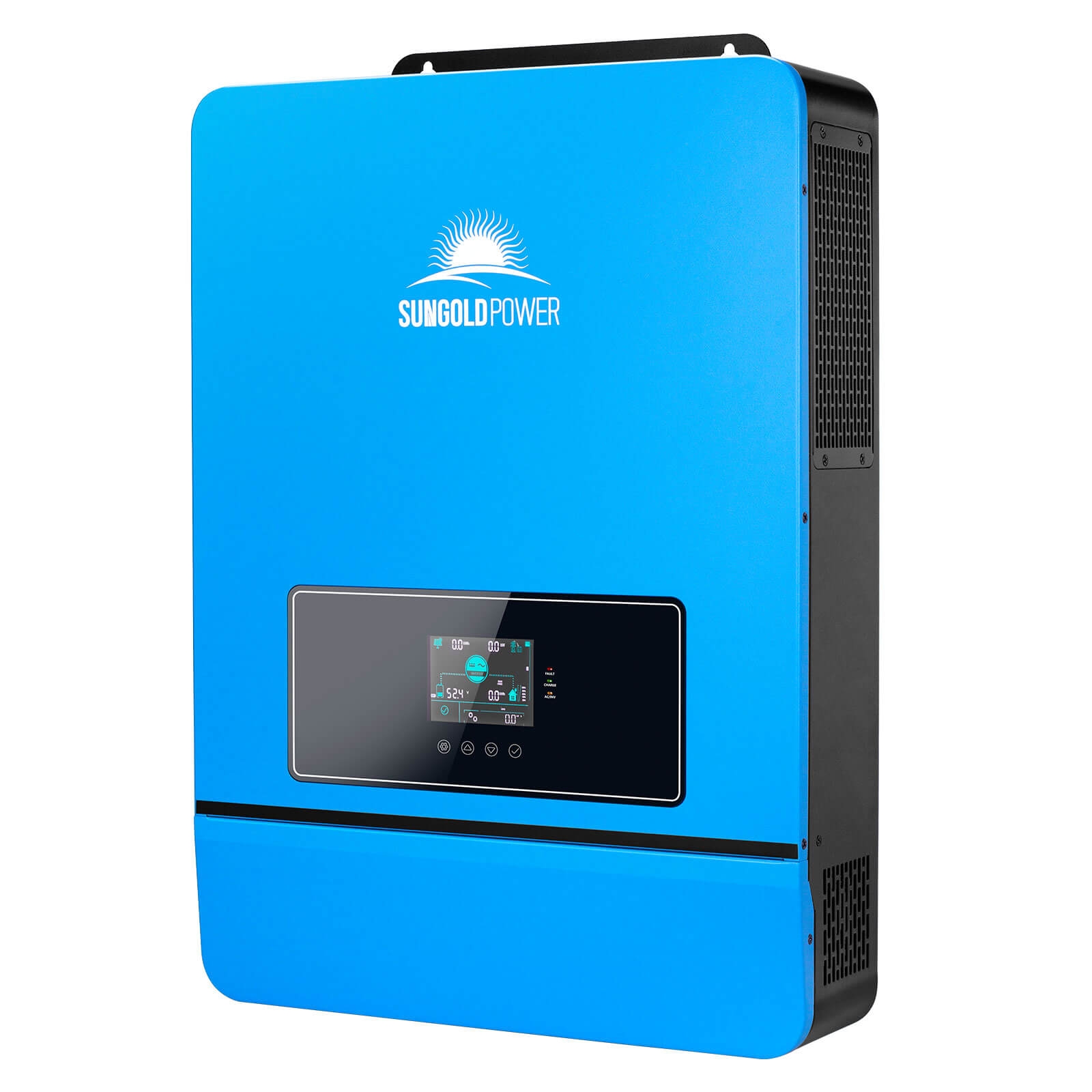
- Cabin or partial home, 4,000 to 6,000 watts on 24V or 48V, such as the EG4 6000XP with 120/240V split phase for a well pump.
- Whole-home off-grid or hybrid, 12,000 watts and up on 48V, such as the EG4 12000XP or the Sol-Ark 12K.

What’s the difference between a pure sine wave and modified sine wave inverter for emergency use?
A pure sine wave inverter produces a smooth waveform that matches utility power. A modified sine wave inverter produces a cheaper stepped version that works for heaters, incandescent bulbs, and basic tools, but not well for the loads that matter in an outage. Refrigerator compressors run hotter on it, and most CPAP manufacturers recommend pure sine wave power.
For home backup, buy pure sine wave. The one modified sine wave unit here, the Go Power! 5000 Watt Heavy-Duty, belongs on a work truck, not in a system running a fridge or a CPAP. If a CPAP is the main load, a dedicated battery from EXP PRO CPAP Batteries & Medical Device Power may be simpler than an inverter at all.

Off-Grid, Hybrid, or Grid-Tie: Which Inverter Keeps Running in a Blackout
Only two of the three inverter types in this collection keep your power on when the grid goes down:
- Off-grid inverters like the EG4 6000XP run entirely from batteries and solar, with no utility connection.
- Hybrid inverters like Sol-Ark and the EG4 FlexBOSS connect to grid and battery, and switch over automatically in an outage.
- Grid-tie inverters without a battery shut down in a blackout by design, to protect line workers repairing the grid.
If you want no wiring at all, an all-in-one unit from Backup Power Stations & Solar Generators combines inverter, battery, and charge controller. For charging, see Portable Solar Panels for Off-Grid & Emergency Power, and for the wider setup, Off-Grid Living & Homestead Gear.
Frequently asked questions
What size power inverter do I need for off-grid solar?
Add up the running watts of everything you will use at the same time, add 20 to 25 percent headroom, then check that the inverter’s surge rating covers motor startups. A refrigerator running at 150 watts can briefly pull 600 to 900 watts when its compressor starts. For essentials like a fridge, lights, a CPAP, and device charging, that usually means a 1,000 to 2,000 watt pure sine wave inverter on 12V. A cabin or partial home typically needs 4,000 to 6,000 watts on 24V or 48V, and a whole-home off-grid system needs 12,000 watts or more on 48V split phase.
What’s the difference between a pure sine wave and modified sine wave inverter for emergency use?
A pure sine wave inverter outputs a smooth waveform identical to utility power, while a modified sine wave inverter outputs a cheaper stepped approximation. Modified sine wave is fine for resistive loads like space heaters, incandescent bulbs, and basic tools. For emergency use, pure sine wave is the better choice, because the loads that matter most in an outage handle modified waveforms poorly: Refrigerator compressors run hotter, most CPAP manufacturers recommend pure sine wave power, some medical devices will not operate correctly, and microwaves and variable-speed motors lose performance.
Can a power inverter run a refrigerator during a power outage?
Yes, if it is pure sine wave and its surge rating covers the compressor startup. Most refrigerators run at 100 to 200 watts but draw several times that for a second or two when the compressor kicks on, so a 1,000 to 2,000 watt pure sine wave inverter is the realistic minimum. Battery capacity matters as much as inverter size: A typical refrigerator uses 1 to 2 kWh per day, so plan for at least that much usable battery per day of outage, plus around 10 percent for inverter losses.
Will a grid-tie solar inverter work during a blackout?
Not on its own. A grid-tie inverter without a battery is required to shut down when the grid fails, so it cannot back-feed power onto lines that utility crews are repairing. Your panels will produce nothing usable until the grid returns. To keep power during an outage you need either an off-grid inverter running from batteries, or a hybrid inverter that connects to both the grid and a battery bank and switches over automatically.
Should I choose a 12V, 24V, or 48V inverter?
Choose based on how much power you need, because higher wattage at low voltage means very high current. 2,000 watts at 12V is about 170 amps, 3,000 watts at 12V is 250 amps, while 6,000 watts at 48V is only 125 amps. As a rule of thumb, 12V suits systems up to about 2,000 to 3,000 watts, 24V suits roughly 3,000 to 5,000 watts, and 48V is the standard for anything larger, including whole-home and split-phase systems. Match the inverter voltage to your battery bank.
HAVE QUESTIONS OR NEED HELP CHOOSING THE RIGHT SURVIVAL GEAR? GET IN TOUCH WITH US TODAY – WE'RE HERE TO HELP!